






Death is one of those topics we often avoid, yet it is an unavoidable reality of life. Behind the scenes, when a loved one passes away, a lot happens to ensure they are treated with dignity until burial or cremation. One of the most important tools used during this process is the mortuary freezer.
This article takes you through everything you need to know—what it is, why it matters, how it works, and even the ethical and cultural aspects that surround its use. We’ll break it all down in simple language so that you can truly understand the subject without technical jargon.
What Exactly Is a Mortuary Freezer?
A mortuary freezer is a purpose-built cooling system that slows down natural decomposition, allowing human remains to be respectfully preserved until final arrangements are made. Think of it as a refrigerator but on a much larger and more advanced scale. While a fridge keeps food from spoiling, a mortuary freezer keeps the body from decaying too quickly.
This cooling process doesn’t stop decomposition completely, but it slows it down, giving families time to make funeral arrangements, gather loved ones, or handle legal requirements.
Why Are Mortuary Freezers Necessary?
You may wonder—why can’t a body just be kept in a cool room? The reality is that the body starts to undergo changes almost immediately after death, and without refrigeration, visible signs of decomposition can appear within just a few hours.
Mortuary freezers are crucial because they:
-
Preserve dignity: They ensure the deceased is cared for respectfully.
-
Provide time: Families often need several days to arrange funerals.
-
Support investigations: In cases of unexpected deaths, preservation is key for autopsies and legal examinations.
-
Help hospitals and funeral homes: They manage multiple cases while maintaining proper standards.
The Science Behind Cold Storage

To understand how these freezers work, imagine pressing “pause” on a movie. You’re not stopping time itself—you’re just delaying the next scene. That’s what refrigeration does for a body.
The freezer works by lowering the temperature to between -10°C and 0°C (14°F to 32°F), depending on the system. At this range, bacteria and enzymes responsible for decomposition slow down dramatically.
Some advanced models can even reach -20°C or lower, especially when remains need to be preserved for weeks or months.
Types of Mortuary Freezers
Not all freezers are the same. Different settings require different designs:
1. Single-Body Units
These are compact systems, usually found in small hospitals or funeral homes, that store one body at a time.
2. Multi-Body Chambers
Larger institutions, like city morgues, often use chambers with space for several bodies. These look like long cabinets with multiple drawers.
3. Portable Freezers
Some organizations use mobile units for emergencies, disasters, or remote locations. These can be transported and set up quickly.
4. High-Tech Preservation Units
Cutting-edge freezers may include humidity control, digital monitoring, and alarms to ensure consistent conditions.
How Are Bodies Stored in Freezers?
Once inside, the body is usually placed on a stainless steel tray or stretcher that slides into a drawer. The trays are easy to clean and designed to handle weight.
Freezers are designed with hygiene in mind—smooth surfaces, non-corrosive materials, and secure doors. This prevents contamination and ensures safety for workers.
Ethical and Cultural Considerations

Death is not just a biological event; it’s deeply personal and cultural. Mortuary freezers are not just about function—they serve the practical need of preservation while upholding the deep respect owed to the deceased.
-
Religious practices: Some faiths prefer immediate burial and may avoid refrigeration unless required by law.
-
Cultural norms: Traditions influence how long a body is kept before burial.
-
Ethics: Professionals handling freezers follow strict guidelines to ensure dignity at all times.
Mortuary Freezers in Public Health
Beyond personal and cultural needs, mortuary freezers play a big role in public health. During pandemics or natural disasters, when deaths rise suddenly, these freezers prevent unsafe conditions.
For instance, during the COVID-19 crisis, many cities relied on additional cold storage units to manage the sudden demand. “In their absence, hospitals and funeral homes would have struggled to cope with the overwhelming demand.
Who Uses Mortuary Freezers?
They’re not just for hospitals. Different institutions rely on them, including:
-
Hospitals and clinics: For short-term storage until families are notified.
-
Funeral homes: While arrangements are made.
-
Law enforcement agencies: In cases requiring forensic investigation.
-
Disaster response teams: During mass casualty events.
Maintenance and Safety Measures
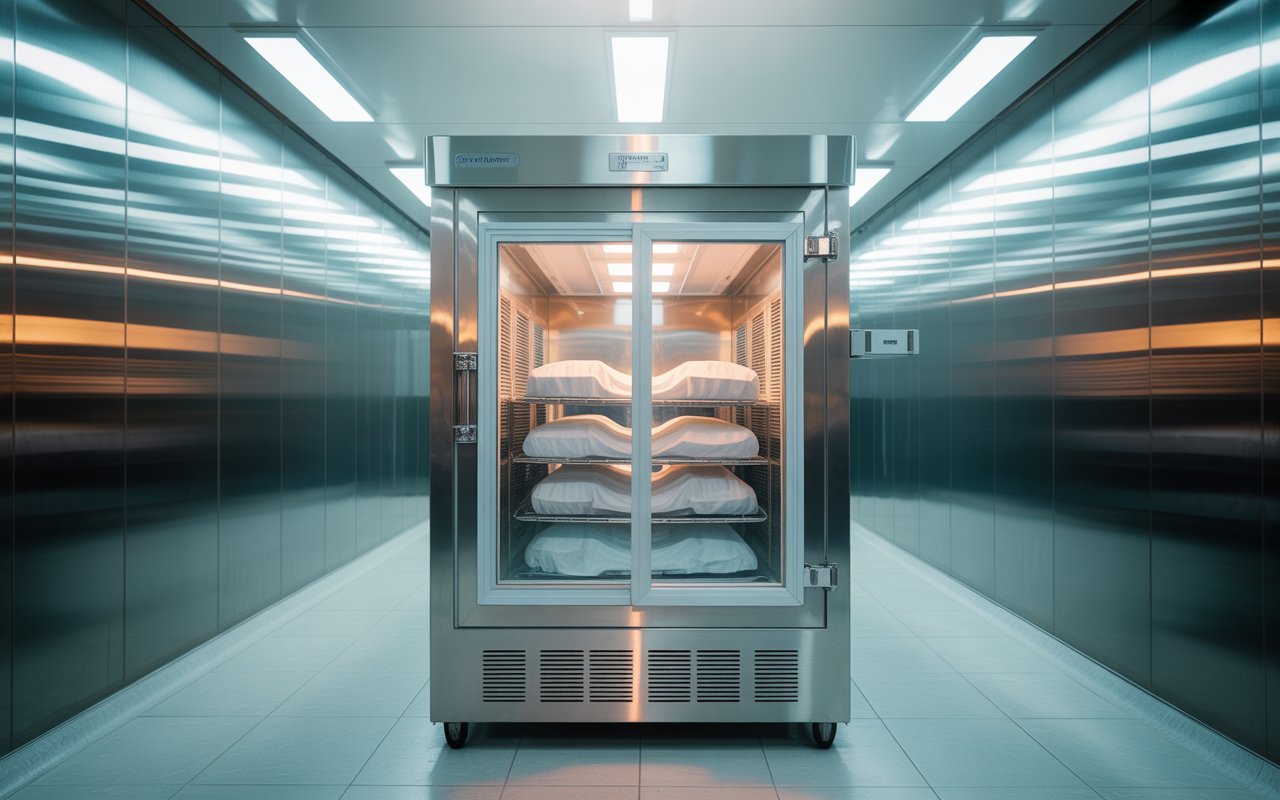
Like any machine, mortuary freezers require regular upkeep. If temperatures fluctuate, preservation may be compromised. That’s why:
-
Routine cleaning prevents bacteria build-up.
-
Regular servicing ensures compressors and cooling systems work properly.
-
Reliable backup power is essential during outages, particularly in hospitals where uninterrupted preservation is a matter of dignity and safety
Staff also wear protective gear, both for hygiene and emotional protection. Caring for human remains demands not only technical skill but also emotional sensitivity and respect
The Human Side of Cold Storage
It’s easy to focus only on the science, but behind every freezer door is a person—a loved one. For families, knowing that their relative is being cared for with dignity provides comfort.
For workers, it’s not just about refrigeration—it’s about humanity. Many funeral directors and morgue staff view their work as a final act of service.
Future of Mortuary Freezers
Technology is constantly evolving. Some researchers are exploring eco-friendly cooling systems that reduce energy consumption. Others are experimenting with preservation methods that might extend storage times without heavy reliance on electricity.
As our societies face climate change, pandemics, and population growth, the demand for efficient, respectful storage solutions will only increase.
FAQs
1. For how long can a body remain preserved in a mortuary freezer?
Typically, bodies can be stored for up to a few weeks, depending on temperature. Long-term storage may require deep freezing at lower temperatures.
2. Do all religions allow the use of mortuary freezers?
Not necessarily. Some faiths encourage quick burial, but most accept refrigeration when necessary, especially for legal or health reasons.
3. How does a mortuary freezer differ from a cold storage room?
A mortuary freezer stores bodies at very low temperatures in individual chambers, while a cold room is a larger space that maintains a controlled cool environment.
4. Can portable mortuary freezers be used during disasters?
Yes, they are designed for emergencies and can be transported quickly to areas with urgent needs.
5. Are mortuary freezers expensive to operate?
They do consume electricity, especially large multi-body units, but regular maintenance and energy-efficient models help reduce long-term costs.
Conclusion
Mortuary freezers may not be a common dinner-table topic, but they are essential tools that quietly support society during one of life’s hardest moments. They bridge the gap between loss and farewell, ensuring dignity, health, and peace of mind.
So next time you think about the unseen systems that keep our world running, remember that even in death, care and respect continue—often behind the closed doors of a humble freezer.