






Ever picked up a lotion, a packaged snack, or even toothpaste and wondered, what actually makes this feel so smooth? There’s a good chance vegetable glycerin was quietly doing its job in the background.
It’s one of those ingredients that shows up everywhere yet rarely gets the spotlight. No drama, no hype—just reliable, slightly sweet, and incredibly versatile. Think of it like the supporting actor who appears in almost every movie but never headlines the poster. This article pulls vegetable glycerin out from behind the scenes and explains what it is, where it comes from, how it’s used, and why so many industries depend on it.
Let’s dig in—no lab coat required.
What Is Vegetable Glycerin, Really?
At its core, vegetable glycerin is a clear, odorless, slightly sweet liquid made from plant-based oils. It feels thick and silky, kind of like syrup, but lighter. You’ll also see it called glycerol or VG, which is just shorthand for the same thing.
What makes it special isn’t how flashy it is—it’s how friendly it is. It mixes well with water, keeps things moist, and doesn’t usually irritate skin or taste weird in food. That’s why it sneaks into products from cookies to creams without you even noticing.
And yes, it’s plant-derived. No animal fats involved.
Where Does Vegetable Glycerin Come From?
Vegetable glycerin is typically made from vegetable oils like palm, soy, or coconut oil. During production, these oils go through a process that separates glycerin from fatty acids. The result is a pure, usable substance that’s safe for many everyday applications.
Here’s a simple way to think about it:
If vegetable oil is a tree, glycerin is one of the branches trimmed and shaped into something useful.
The quality depends a lot on how it’s processed. Food-grade and pharmaceutical-grade versions go through extra purification to remove impurities.
Why Is It So Widely Used?
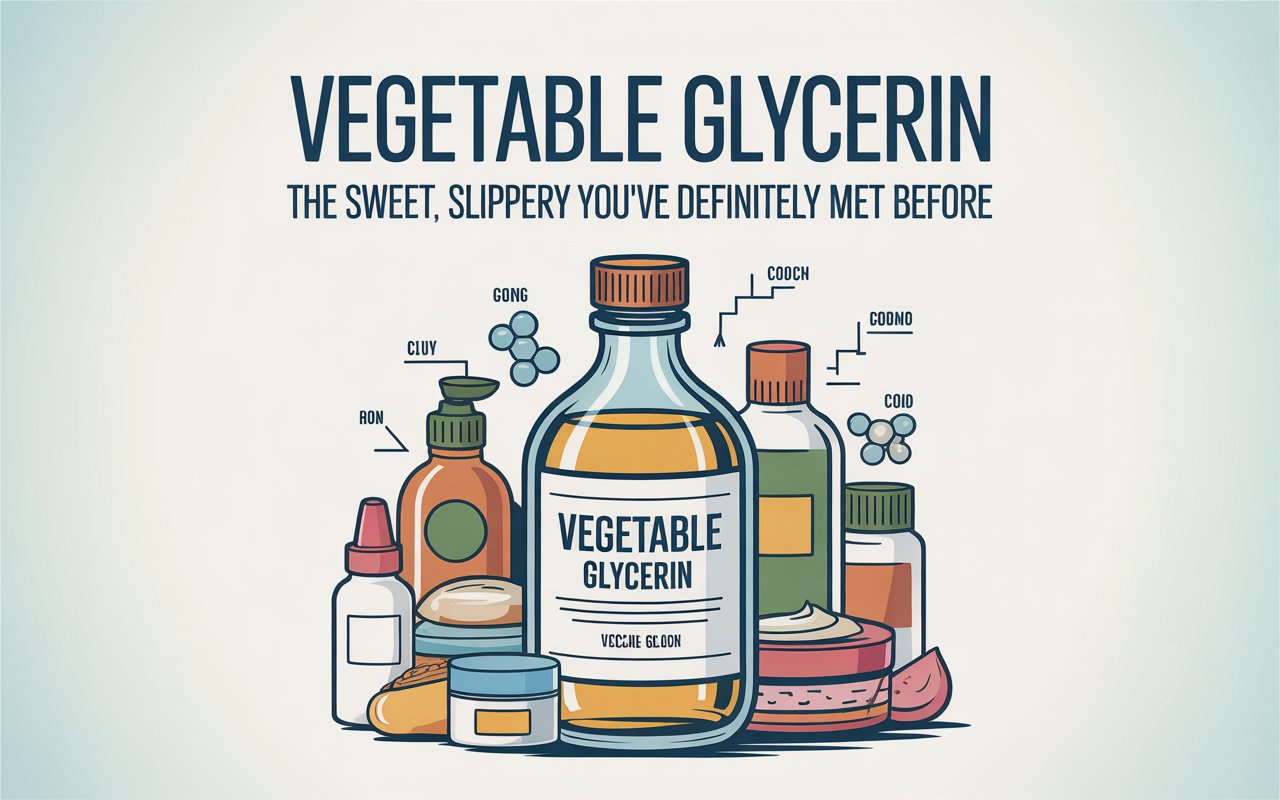
Because it’s ridiculously useful.
Vegetable glycerin acts as a humectant, which is just a fancy way of saying it helps hold onto moisture. It also improves texture, adds mild sweetness, and prevents products from drying out too fast.
In practical terms, it helps:
-
Lotions feel smooth instead of chalky
-
Baked goods stay soft longer
-
Syrups pour evenly
-
Toothpaste not harden in the tube
Not bad for a quiet liquid, right?
Vegetable Glycerin in Food Products
You’ve probably eaten vegetable glycerin more times than you can count.
Texture and Moisture Control
In food, its biggest job is keeping things moist. Nobody likes a dry protein bar or crumbly cake. Glycerin helps manage moisture so food stays pleasant longer.
Mild Sweetness Without Sugar Overload
It tastes gently sweet but doesn’t spike sweetness the way sugar does. That’s why it appears in:
-
Sugar-free candies
-
Processed baked goods
-
Flavored syrups
It’s not used to replace sugar completely, but it smooths out flavors and improves mouthfeel.
Shelf Life Support
By controlling moisture, it also helps prevent some foods from going stale too quickly. That’s a win for both manufacturers and snack lovers.
Its Role in Skincare and Beauty Products
If vegetable glycerin had a resume, skincare would be its longest job.
Hydration Magnet
Glycerin draws water toward the skin and helps hold it there. That’s why it shows up in:
-
Moisturizers
-
Cream cleansers
-
Serums
-
Soaps
Imagine your skin wearing a lightweight raincoat—hydrated but not greasy.
Gentle and Skin-Friendly
It’s generally well-tolerated, even by sensitive skin types. That’s a big reason brands rely on it instead of harsher ingredients.
Texture Improvement
It also helps creams spread evenly and feel pleasant instead of heavy or sticky.
Vegetable Glycerin in Medicine and Healthcare
Medicine might be one of the least glamorous uses, but it’s incredibly important.
Liquid Medications
Many syrups use glycerin to:
-
Improve taste
-
Control thickness
-
Prevent crystallization
Nobody wants medicine that feels gritty or separates oddly.
Capsules and Coatings
It’s also used to keep capsules flexible and prevent cracking.
Soothing Properties
In some topical treatments, glycerin helps calm dryness or irritation, especially in oral and skin-care formulations.
Humectant: The Secret Superpower
Let’s pause here, because this is key.
A humectant attracts water from the air or deeper layers of skin and holds onto it. Vegetable glycerin is excellent at this.
Think of it like a sponge that doesn’t drip. It grabs moisture and keeps it where it’s useful, rather than letting it evaporate.
That’s why it appears in:
-
Hair products
-
Shaving creams
-
Hand sanitizers
Anytime moisture matters, glycerin shows up.
How Vegetable Glycerin Supports Hair Care
Hair products love glycerin almost as much as skin products do.
Smoothness and Softness
It helps hair feel softer and look shinier by maintaining moisture balance.
Curl Definition
Curly and textured hair products often rely on glycerin to:
-
Reduce frizz
-
Enhance curl shape
-
Prevent dryness
That said, humidity matters. In extremely dry or overly humid conditions, too much glycerin can behave unpredictably. Balance is everything.
Industrial and Everyday Household Uses
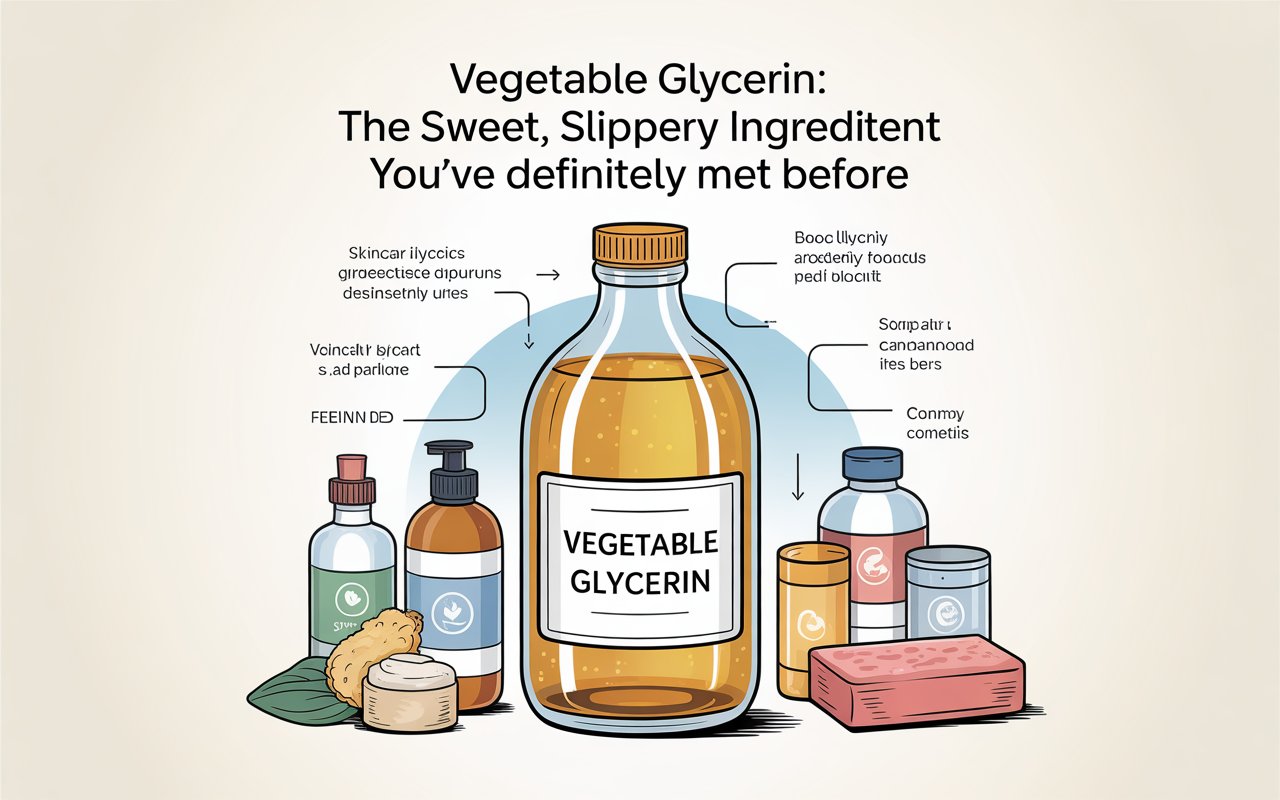
Beyond food and body care, vegetable glycerin works quietly in everyday life.
Cleaning Products
It’s sometimes used to improve texture and spreadability in household cleaners.
Lubrication
Because it’s slippery and non-toxic, it can work as a mild lubricant in certain applications.
Crafts and DIY Projects
Soap-making, candles, and homemade cosmetics often use it for moisture and texture control.
Is Vegetable Glycerin Safe?
Short answer: yes, when used as intended.
It’s widely recognized as safe for consumption and topical use. Food-grade and pharmaceutical-grade versions meet strict purity standards.
A few things to keep in mind:
-
Quality matters—always use the proper grade for the purpose
-
Extremely high intake may cause mild digestive discomfort
-
Topical use is usually well-tolerated
As with most things, moderation and proper sourcing are key.
Vegetable Glycerin vs Synthetic Alternatives
You might wonder how it compares to similar ingredients.
Plant-Based Advantage
Vegetable glycerin comes from renewable sources, which appeals to people looking for plant-derived options.
Versatility
It performs well across food, cosmetics, and medicine, something many alternatives can’t do equally well.
User Comfort
It’s less irritating for many people compared to some synthetic humectants.
That versatility is why it stays popular decade after decade.
Environmental Considerations
Because it comes from vegetable oils, the sustainability of glycerin depends on how those crops are grown and sourced. Responsible manufacturing practices matter.
Some companies now focus on:
-
Sustainable palm sourcing
-
Transparent supply chains
-
Reduced environmental impact
So while glycerin itself is plant-based, ethical sourcing still plays a role.
Final Thoughts: Why Vegetable Glycerin Deserves Attention
Vegetable glycerin isn’t flashy. It doesn’t make bold claims or dominate headlines. But it’s one of those ingredients that makes modern life smoother—literally and figuratively.
From keeping your food soft to making your skin feel comfortable, it quietly improves everyday experiences. Like a good friend who always shows up on time, you only notice it when it’s missing.
Once you know what to look for, you’ll spot it everywhere—and maybe even appreciate the small role it plays in making things just a little better.
Frequently Asked Questions
1. What is vegetable glycerin made from?
It’s derived from plant-based oils such as palm, soy, or coconut through a purification process that separates glycerin from fatty acids.
2. Is vegetable glycerin safe to eat?
Yes, food-grade vegetable glycerin is widely used in food products and is considered safe when consumed in normal amounts.
3. Does vegetable glycerin hydrate skin?
Yes, it acts as a humectant that attracts and retains moisture, helping keep skin hydrated and comfortable.
4. Is vegetable glycerin suitable for sensitive skin?
Most people tolerate it well, including those with sensitive skin, though patch testing is always a good idea.
5. Can vegetable glycerin replace sugar?
It provides mild sweetness but does not fully replace sugar in baking or cooking due to differences in texture and behavior.