





Have you ever sat down to work, full of motivation, only to find yourself checking your phone five minutes later? Or maybe you start a task and suddenly an hour disappears, yet nothing meaningful gets done. If that sounds familiar, you’re not alone. Many people struggle with focus in a world full of distractions. This is where a 25 minute timer quietly steps in and makes a surprising difference.
At first glance, it sounds almost too simple. How can breaking time into short blocks really help? But just like a small key can open a heavy door, this short time frame has the power to unlock focus, energy, and clarity. Let’s explore how it works, why it’s effective, and how you can use it in everyday life.
Understanding the Idea Behind a 25 Minute Timer
The concept is built on a very human truth: our brains don’t like endless tasks. When something feels too big or too long, we delay it. A 25 minute timer turns a large mountain of work into a small, walkable hill.
Instead of saying, “I’ll study all afternoon,” you say, “I’ll focus for 25 minutes.” That feels doable, right? This mental shift reduces resistance and helps you begin without stress.
Another important idea here is attention span. Most people can maintain deep focus for a limited period before mental fatigue sets in. Short, intentional sessions respect how the brain naturally works rather than fighting against it.
Why 25 Minutes Feels “Just Right”
Why not 10 minutes? Or 60 minutes? The beauty of 25 minutes is balance.
It’s long enough to get meaningful work done. You can write pages, solve problems, or clean a room without rushing. At the same time, it’s short enough to avoid burnout. Knowing that a pause is just around the corner helps your mind relax and stay fully engaged in the task at hand.
Think of it like cooking on medium heat instead of high flame. Too much heat burns the food, too little takes forever. The middle ground works best.
How the Brain Responds to Time Limits
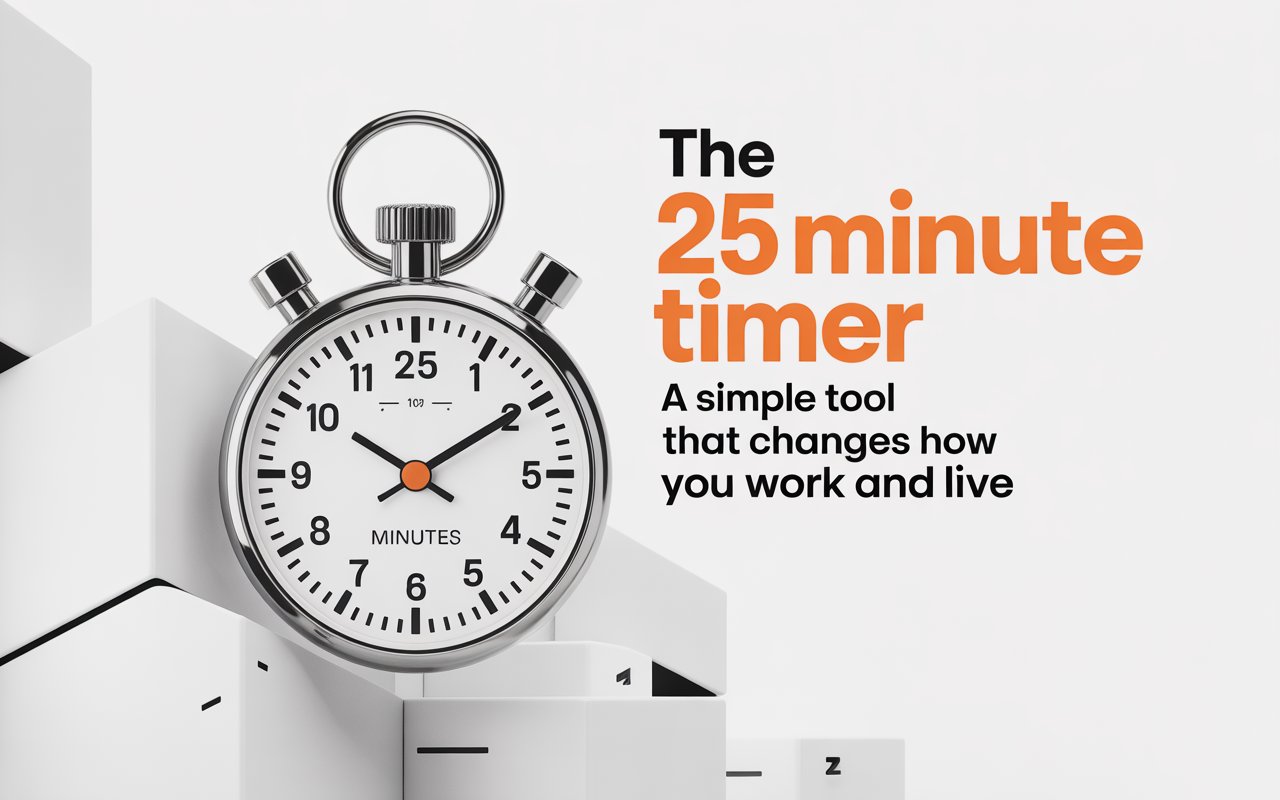
When you set a clear time boundary, your brain shifts into a more alert state. Psychologists often describe this as structured urgency. You’re not panicking, but you’re aware the clock is ticking.
This awareness reduces mind-wandering. Instead of thinking, “I have all day,” your mind says, “Let’s use this time well.” It also cuts down on perfectionism because you’re focused on progress, not endless polishing.
Interestingly, time limits can even boost creativity. Constraints often force the brain to think more efficiently, like writing a short poem instead of a long essay.
The Role of Breaks in Staying Productive
The 25 minute timer isn’t just about working; it’s also about resting.
After each session, a short break gives your brain a chance to reset. This pause prevents mental exhaustion and keeps motivation alive throughout the day. Without breaks, productivity drops sharply, even if you sit at your desk for hours.
During breaks, it’s best to stand up, stretch, drink water, or look outside. Avoid activities that pull you into another mental task. The goal is refreshment, not replacement.
Using a 25 Minute Timer for Study and Learning
Students often feel overwhelmed by large syllabi or long reading lists. A 25 minute timer turns studying into manageable pieces.
Instead of cramming for hours, learners can focus deeply on one topic at a time. This improves understanding and memory because the brain stays engaged without overload.
It also helps reduce procrastination. Starting a study session feels less scary when you know it will end soon. Over time, these short sessions add up to strong, consistent learning habits.
Improving Work Performance with Short Focus Sessions
In professional settings, distractions are everywhere: emails, messages, meetings. A 25 minute timer helps create a protected bubble of focus.
During this time, notifications are silenced, and attention stays on one task. This approach is especially useful for writing, planning, problem-solving, and creative thinking.
Many people find they complete tasks faster and with better quality. Instead of multitasking, which often reduces efficiency, they give full attention to one thing at a time.
Managing Stress and Mental Overload
Stress often comes from feeling out of control with time. When tasks pile up, anxiety increases. A 25 minute timer brings a sense of order.
By working in short sessions, you can see progress clearly. Each completed session feels like a small win, and those wins build confidence.
This method also encourages realistic expectations. You stop expecting yourself to do everything at once and start respecting your limits. Over time, this reduces mental pressure and emotional fatigue.
Using the Timer for Household and Personal Tasks
Productivity isn’t only about work or study. Everyday chores can benefit too.
Cleaning, organizing, or even cooking can feel tiring when there’s no clear end point. A 25 minute timer turns these tasks into focused bursts. You might be surprised how much you can accomplish in a short time.
This approach also helps with habits like exercise, reading, or journaling. Committing to 25 minutes feels achievable, making it easier to stay consistent.
Digital vs. Physical Timers: Does It Matter?
Some people prefer digital timers on their phones or computers. Others like physical timers that sit on the desk. Both work, but the choice depends on personal preference.
Digital tools are convenient and flexible, but they can also become distractions if notifications appear. Physical timers offer a tactile experience and reduce screen time, which some find calming.
The key is simplicity. The timer should support focus, not become another thing to manage.
Common Mistakes People Make with Time-Based Focus
While the 25 minute timer is simple, people sometimes misuse it.
One common mistake is overloading sessions with too many tasks. Each session should focus on one clear goal. Another mistake is skipping breaks, which defeats the purpose and leads to burnout.
Some people also feel guilty when they don’t use every minute perfectly. That’s unnecessary. The goal is progress, not perfection.
Adapting the Method to Your Personal Rhythm
Everyone’s energy levels are different. While 25 minutes works well for many, it’s okay to adjust slightly if needed.
Some people prefer shorter sessions when tired or longer ones when deeply engaged. The core idea is intentional focus followed by rest.
Think of it like walking pace. You don’t walk the same speed on every road. You adjust based on terrain, energy, and destination.
Why Consistency Matters More Than Speed
Using a 25 minute timer once won’t magically change your life. The real benefit comes from consistency.
Short, focused sessions done regularly create strong habits. Over time, your ability to concentrate improves, and tasks feel less intimidating.
This steady rhythm builds trust in yourself. You learn that you can show up, focus, and make progress, even on difficult days.
Conclusion: Small Time Blocks, Big Impact
The 25 minute timer proves that productivity doesn’t have to be complicated. By working with your brain instead of against it, this simple approach helps you focus, reduce stress, and make steady progress.
It’s like planting seeds instead of trying to grow a forest overnight. Each session may seem small, but together they create meaningful change. Whether you’re studying, working, or managing daily life, this method offers a calm and practical way forward.
Frequently Asked Questions
What is the main purpose of a 25 minute timer?
Its main purpose is to improve focus by encouraging short, uninterrupted periods of work followed by breaks.
Can this method help with procrastination?
Yes, breaking tasks into small time blocks makes starting easier and reduces avoidance behavior.
Is a break always necessary after each session?
Breaks are strongly recommended because they help prevent mental fatigue and maintain motivation.
Can I adjust the time length if 25 minutes feels too long or short?
Absolutely. The method is flexible and can be adapted to suit individual energy levels.
Does this approach work for creative tasks as well?
Yes, many people find that short, focused sessions actually enhance creativity by reducing pressure and distractions.