




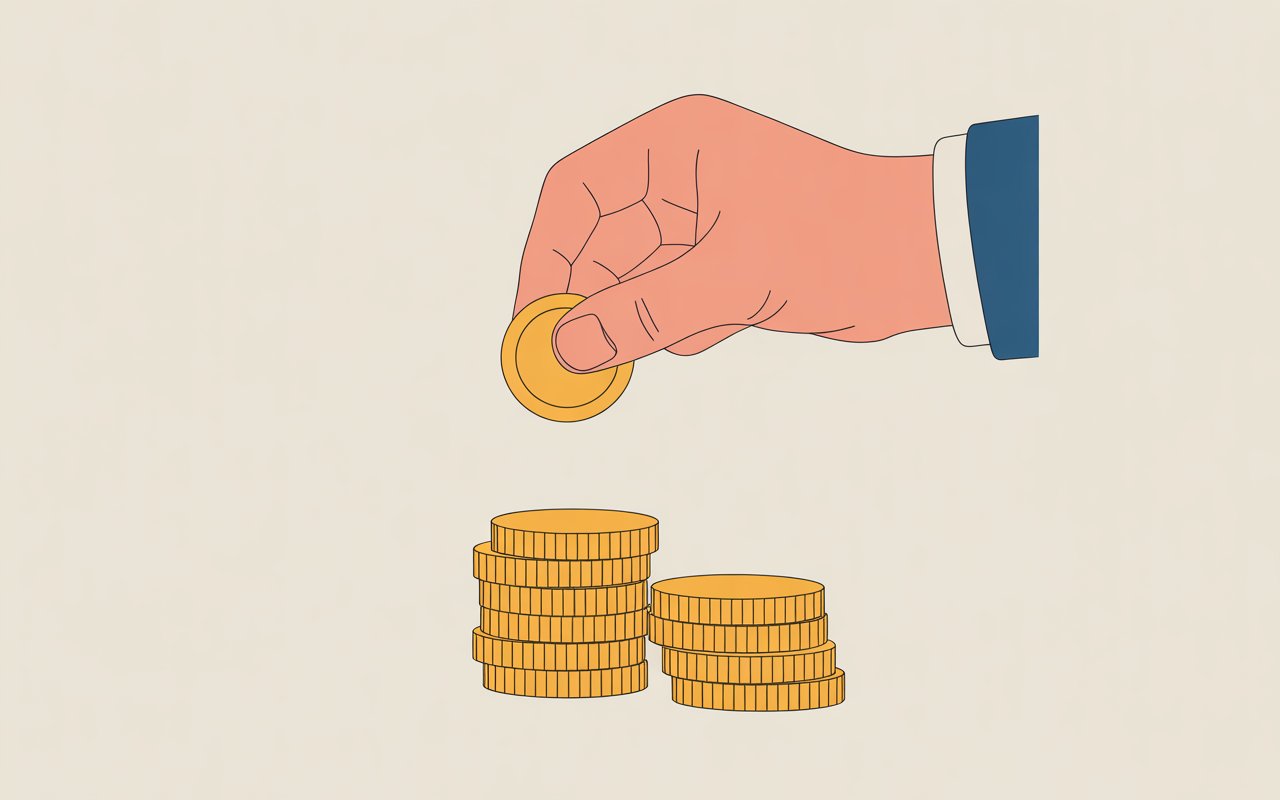

Life is full of choices. Some are small, like what to eat for dinner, while others feel life-changing, like picking a college, moving to a new city, or saying yes to a big opportunity. When faced with tough decisions, humans have always looked for simple ways to break the tie in their minds. And one of the oldest, simplest, and most universal methods is to flip a coin.
At first glance, it may seem silly to let a piece of metal decide your fate. But coin flipping has a surprisingly rich history, psychological depth, and even scientific relevance. Whether you’ve done it to settle an argument with a friend, decide who goes first in a game, or test your luck, the act of flipping a coin has meaning beyond chance.
In this article, we’ll dive deep into everything you need to know about this little ritual—from its origins and symbolism to its use in modern life and the psychology behind why it works so well.
The Ancient Roots of Coin Flipping
Humans have been turning to random chance for centuries. Long before coins existed, people used pebbles, bones, shells, or sticks to settle disputes and make decisions. In ancient Rome, people played a game known as navia aut caput—literally ‘ship or head’—where they tossed a coin marked with a ship on one side and the emperor’s head on the other. the emperor’s head.
This game spread quickly, and the practice of flipping coins for decisions became deeply rooted in European culture. Over time, as coins evolved, so did the tradition. By the Middle Ages, it was common to let a coin decide anything from games to disagreements. The idea wasn’t just about luck—it was about fairness.
Why a Coin?
You may wonder, why a coin and not dice, a card, or some other object? The answer is simple: a coin has two clear outcomes. Heads or tails. Yes or no. One or the other.
This binary choice makes it perfect for resolving situations where only two possibilities exist. Unlike dice, which can have six sides, a coin keeps things clear-cut. It also happens to be something people carry around daily, making it convenient for impromptu decisions.
Think of it like a pocket-sized referee. Whenever two people can’t agree, the coin steps in with no bias, no favoritism, just chance.
Heads or Tails: The Symbolism Behind the Sides
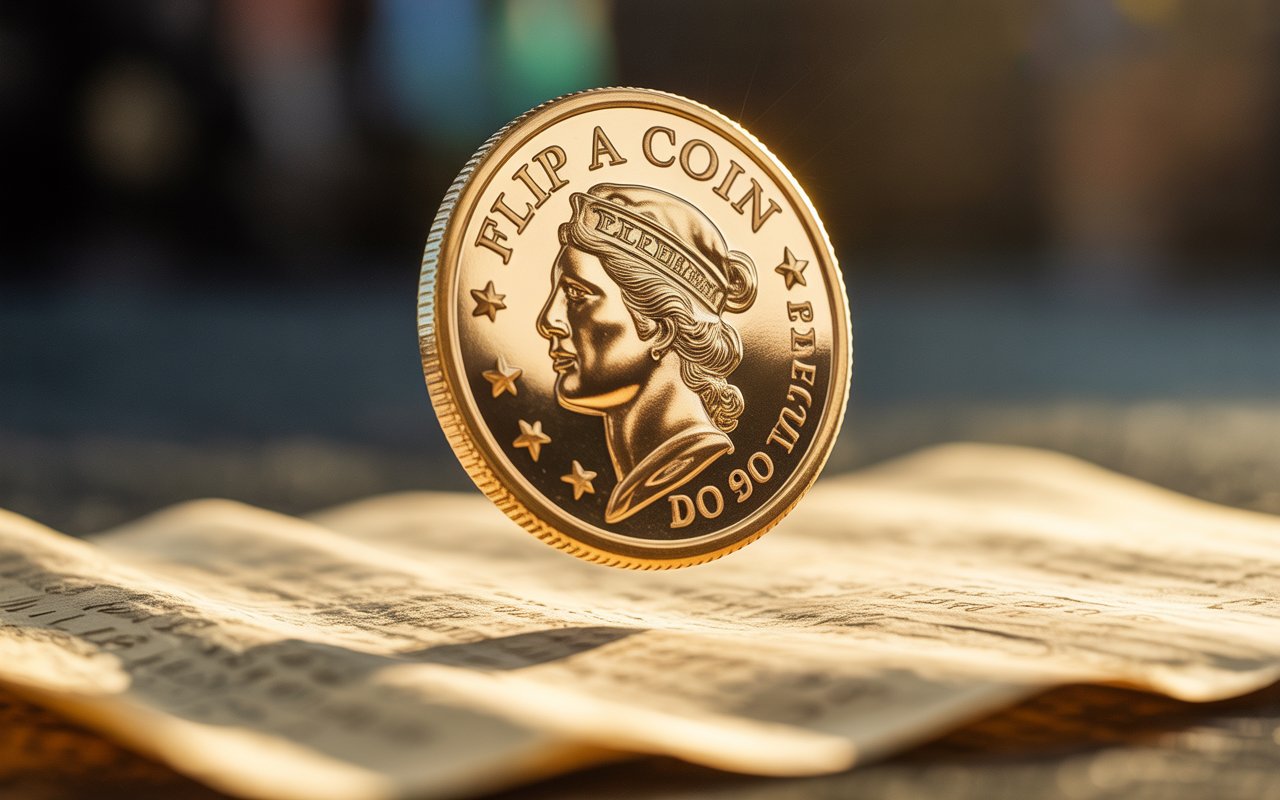
It might surprise you that people attach different meanings to “heads” and “tails.”
-
Heads often represents authority, leadership, or importance. After all, it usually bears the image of a ruler, president, or symbolic figure.
-
Tails represents the reverse side—the alternative, the “other” option, sometimes seen as luck or rebellion against the norm.
Over time, people have even developed superstitions about which side is luckier. In many Western cultures, players tend to call “heads” first, believing it to be the favored side.
The Science of Coin Tossing
Here’s where things get interesting: is flipping a coin truly random?
Mathematicians and physicists have studied coin flips for decades, and the answer is… mostly yes, but not perfectly. Ideally, a perfectly balanced coin should give an equal 50-50 chance of landing on heads or tails.. However, studies show a slight bias depending on how the coin is flipped.
-
If you spin a coin on its edge, it tends to favor one side more.
-
If you flip it with your thumb, subtle differences in force and angle can give one outcome a slight edge.
-
In fact, some research found that coins have about a 51% chance of landing on the same side they started on.
So while a coin flip feels random, it’s really governed by physics—gravity, spin, force, and air resistance.
Flipping a Coin in Sports
Sports fans know coin flips well. From deciding who kicks off in football to determining batting order in cricket, coin tosses are deeply ingrained in competitive traditions.
Why? Because fairness matters in games. A coin toss removes bias, making it the simplest way to ensure no team has an unfair advantage at the start. In fact, the NFL Super Bowl coin toss has become a famous ritual, even spawning betting traditions.
But it’s not just about fairness—it’s also about ceremony. That small flip marks the official start of something big.
The Psychology of Decision-Making
Now let’s move beyond the physical coin and look at what’s happening in our minds when we use one.
Flipping a coin isn’t just about leaving things up to chance. It also reveals your hidden preference.
Here’s how:
-
When you flip a coin, your gut often reacts before it lands.
-
If it comes up with a result you secretly didn’t want, you feel disappointed.
-
If it matches your true desire, you feel relieved.
In this way, a coin doesn’t just choose for you—it helps clarify what you actually want. It’s like holding up a mirror to your inner thoughts.
Luck, Superstition, and Ritual
To many, the simple act of flipping a coin carries a sense of luck and chance. Some believe certain coins bring better outcomes. Others feel that “heads” is luckier, while some cultures favor “tails.”
The act itself can even feel ceremonial. Tossing a coin isn’t just about the result—it’s about letting go of control for a moment and trusting fate. In uncertain times, that surrender can feel strangely comforting.
Everyday Uses of Coin Flips
We often think of coin flips as something used in games, but they appear in daily life more than we realize. People flip coins to decide things like:
-
Who pays for dinner
-
Which movie to watch
-
Whose turn it is to drive
-
Where to go on vacation
-
What project to start first
It’s a quick, playful, and universally understood way to move past indecision.
Coin Flipping in Popular Culture
From movies to literature, coin flips often symbolize fate. Think of the character Two-Face in the Batman series, who lets a coin determine his moral choices. Or the Coen brothers’ film No Country for Old Men, where a coin toss represents life or death.
These portrayals highlight how something so small can represent huge ideas like destiny, chance, and morality.
Digital Coin Flips: The Modern Evolution
In our digital world, even coin flipping has gone virtual. Today, numerous apps and online tools allow you to flip a coin with just a single tap or click. Virtual assistants like Siri or Alexa can “flip” one for you instantly.
Although it misses the physical thrill of a coin tumbling through the air, it still holds the same psychological impact. In fact, digital flips are often more trusted in online games or disputes, since no one can rig the toss.
Why We Still Flip Coins Today
Despite all our technology, why do we still rely on this age-old ritual? Because it speaks to something deeply human.
-
It’s simple. No need for fancy tools or long debates.
-
It’s universal. Everyone understands it.
-
It feels fair. No bias, just chance.
-
It adds a touch of drama. That brief moment of suspense before the coin lands holds real weight.
In a world full of complex choices and endless information, flipping a coin reminds us of the beauty in simplicity.
FAQs
1. Is flipping a coin truly 50/50?
Not perfectly. While it’s very close to 50/50, slight biases in flipping technique and coin design can affect the outcome.
2. Why do sports use coin tosses?
To ensure fairness when deciding which team starts first, especially in games where the opening play can be an advantage.
3. Can flipping a coin help with big life decisions?
Yes. Even if you don’t rely on the outcome, the emotional reaction you have can reveal your true preference.
4. Which side is luckier, heads or tails?
There’s no scientific proof either side is luckier, though cultural superstitions often favor heads.
5. Are digital coin flips reliable?
Yes, they use algorithms to simulate randomness, and in many cases, they’re considered more unbiased than human flips.
Conclusion: More Than Just a Coin
On the surface, flipping a coin seems like a small, even childish act. But when we look deeper, it’s clear that it carries history, science, psychology, and symbolism. It’s a tool for fairness, a mirror for our feelings, and a ritual that connects us across cultures and centuries.
The next time you’re stuck on a choice, try flipping a coin. You might be surprised—not just by the result, but by how you feel about it. After all, sometimes the simplest tools are the most powerful.