







The world is watching closely as tensions rise between the Philippines and China, particularly in the South China Sea. Every time a news headline mentions standoffs at sea, military exercises, or diplomatic protests, people begin to wonder: Is war between these two countries really possible?
It’s a fair question. After all, history teaches us that territorial disputes have sparked major conflicts in the past. But in today’s interconnected world, war isn’t always the first choice, even when countries strongly disagree. To really understand whether the Philippines and China could go to war, we need to break down the history, politics, economics, and military strategies behind the situation.
In this article, we’ll explore the roots of the dispute, the interests of each side, the role of international law, and the influence of outside powers. Along the way, we’ll weigh the likelihood of open conflict versus peaceful resolution.
The Historical Roots of the Dispute
The story begins with the South China Sea, a vast body of water rich in natural resources and vital for global trade. Both China and the Philippines claim certain areas of it, especially the Spratly Islands and Scarborough Shoal.
China bases its claim on a “nine-dash line” that stretches across nearly the entire sea, citing centuries-old maps and historical usage. On the other hand, the Philippines relies on international law, particularly the United Nations Convention on the Law of the Sea (UNCLOS), which grants countries control over waters within 200 nautical miles of their coasts — known as an Exclusive Economic Zone (EEZ).
This clash between “historical rights” and “modern international law” is at the heart of the disagreement. And like two neighbors fighting over a fence line, both sides believe they are justified in their position.
Why the South China Sea Matters
At first glance, one might ask: Why fight over patches of water and tiny islands? The answer lies in three powerful factors:
-
Resources: The sea holds rich fishing grounds that millions of Filipinos and Chinese rely on for food and income. Beneath the seabed, experts believe there are vast reserves of oil and natural gas waiting to be tapped.
-
Trade: One-third of global shipping passes through this region. Whoever controls the sea lanes has influence over trillions of dollars’ worth of trade.
-
Security: For China, controlling the South China Sea strengthens its defensive perimeter and projects its power. For the Philippines, protecting its EEZ is about sovereignty and survival.
Think of the South China Sea like a crossroads market. Whoever controls the stalls not only profits but also gains leverage over everyone passing through.
The Philippines’ Perspective

For the Philippines, the dispute is not just about maps but about livelihoods and independence. Fishermen have been blocked, harassed, and even water-cannoned by Chinese coast guard vessels. These incidents stir anger and nationalism at home.
Manila took a bold step in 2013 by bringing its case to the Permanent Court of Arbitration in The Hague. In 2016, the tribunal ruled overwhelmingly in favor of the Philippines, rejecting China’s nine-dash line claim. However, Beijing refused to recognize the ruling, calling it “null and void.”
This left the Philippines in a difficult spot: armed with international law but facing a much larger, more powerful neighbor who ignores it.
China’s Perspective
From Beijing’s point of view, the South China Sea is part of its core national interest. Chinese leaders often frame their stance as correcting historical injustices, arguing that colonial powers once humiliated China by seizing territory.
Additionally, the South China Sea is a strategic shield. Chinese military bases on artificial islands give Beijing the ability to project power far into Southeast Asia and deter rivals like the United States.
For China, backing down would not only mean losing resources but also showing weakness — something its leaders are determined to avoid.
The Role of International Law
International law clearly supports the Philippines, at least on paper. UNCLOS provides guidelines for maritime zones, and the 2016 arbitration ruling invalidated China’s sweeping claims.
But here’s the catch: international courts don’t have a police force. Their rulings rely on countries voluntarily complying. When a major power like China rejects a ruling, enforcement becomes nearly impossible without global consensus.
This highlights the classic dilemma of international law — it’s like a referee with no whistle. The rules are there, but without enforcement, they often get ignored.
Military Balance: Unequal Strengths
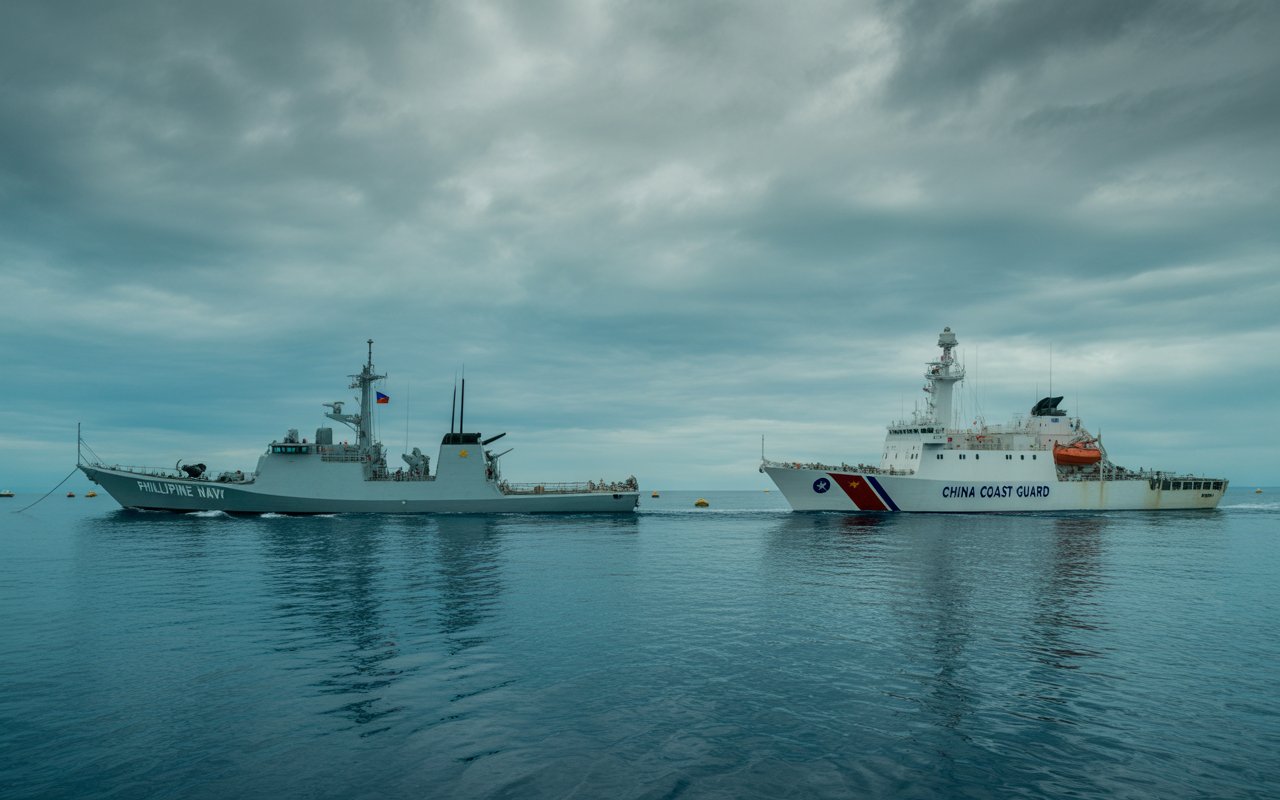
When discussing the possibility of war, military strength is an unavoidable topic. The Philippines’ armed forces are relatively small, underfunded for decades, and focused more on internal security than external defense.
By contrast, China’s military is the world’s second most powerful. Its navy is now the largest in the world by number of ships. Advanced missile systems, submarines, and fighter jets give Beijing a massive edge.
Simply put, a head-to-head war would not be a fair fight. The Philippines knows this, and it’s one reason why Manila leans heavily on alliances.
The Importance of Alliances
The Philippines has one ace up its sleeve: its alliance with the United States. The two countries have a Mutual Defense Treaty, meaning if one is attacked, the other is obligated to help.
In recent years, Washington has reaffirmed that this treaty covers Philippine forces in the South China Sea. The U.S. has also conducted “freedom of navigation” patrols to challenge China’s expansive claims.
Other countries, such as Japan and Australia, have also expressed support for Manila. This international backing gives the Philippines some protection — but it also risks turning the dispute into a broader confrontation.
Escalation vs. Restraint: What Could Happen Next
The million-dollar question is whether these tensions will explode into open war. Several scenarios are possible:
-
Limited Skirmishes: Small-scale clashes between coast guards or navies could occur, especially around disputed reefs.
-
Accidental Conflict: A collision or miscalculation could spiral into something bigger.
-
Cold Confrontation: Both sides continue posturing, but avoid direct combat, sticking to diplomatic protests and economic measures.
-
Full-Scale War: The least likely but most dangerous scenario, where alliances pull in outside powers.
So far, both countries have shown restraint despite fiery rhetoric. The risk lies more in accidents and miscalculations than deliberate war planning.
Economic Interdependence as a Brake on War

War isn’t just about soldiers and ships — it’s also about economics. China is the Philippines’ largest trading partner, and millions of Filipinos work in Chinese-owned companies or depend on exports to China.
For Beijing, a war would risk global backlash, sanctions, and disruption of trade routes it relies on for energy and goods. In an interconnected world, conflict carries massive economic costs that neither side can easily afford.
In many ways, the economies of the Philippines and China are like two climbers roped together on a mountain. If one falls, both are at risk of tumbling.
Public Opinion and Nationalism
National pride adds another layer of complexity. In the Philippines, public anger toward China has grown with every incident at sea. Politicians often capitalize on this sentiment, demanding stronger action to defend sovereignty.
In China, nationalism is equally strong. State media portrays the South China Sea as a sacred part of Chinese territory. Any hint of concession could be seen as weakness, something the leadership wants to avoid at all costs.
This makes compromise politically difficult, even if it might be practical.
Paths Toward Peaceful Resolution
Despite the challenges, war is not inevitable. There are peaceful pathways available:
-
Bilateral Talks: Direct negotiation, though past attempts have stalled.
-
ASEAN Mediation: Regional organizations like ASEAN could push for a binding code of conduct.
-
Joint Resource Development: Sharing fishing rights or energy exploration could reduce tension.
-
Confidence-Building Measures: Hotlines between coast guards, rules of engagement, and regular dialogues could prevent accidents.
These steps require political will, but they show that alternatives to conflict exist.
So, Will They Go to War?
The honest answer: Unlikely, but not impossible.
The Philippines and China have clashed rhetorically and physically at sea, but both have much to lose in a full-blown war. The Philippines would face overwhelming military odds, while China would risk international isolation and economic damage.
Most experts believe we’ll continue to see tension without total war — a simmering dispute rather than an explosive conflict. Still, the danger of miscalculation remains, especially in crowded waters where coast guard and navy ships operate close together.
Conclusion
The question of whether the Philippines and China will go to war doesn’t have a simple yes or no answer. What we can say is this: the dispute is serious, deeply rooted, and unlikely to vanish anytime soon.
Both sides are trapped between history, national pride, and practical needs. Yet, both also recognize the catastrophic costs of war. For now, restraint, diplomacy, and alliances are keeping the peace — however fragile it may be.
Like a storm brewing on the horizon, the danger is real, but whether it breaks depends on the choices leaders make today.
FAQs
1. Why are the Philippines and China fighting over the South China Sea?
Because both countries claim overlapping parts of the sea. China bases its claim on historical maps, while the Philippines uses international law (UNCLOS) to assert its rights.
2. Did the international court ruling favor the Philippines?
Yes. In 2016, the Permanent Court of Arbitration ruled in favor of the Philippines, rejecting China’s nine-dash line. However, China refused to accept the decision.
3. Could the United States get involved if conflict breaks out?
Yes. The U.S. and the Philippines have a Mutual Defense Treaty, and Washington has confirmed that it covers incidents in the South China Sea.
4. What would happen to trade if war occurred?
Trade would be severely disrupted since one-third of global shipping passes through the South China Sea. Both China and the Philippines would suffer economically, along with many other countries.
5. Is war between the Philippines and China likely?
Full-scale war is unlikely because of the high costs involved. However, smaller clashes or accidental confrontations remain possible.