





When you think about the World Cup, a few legendary names immediately come to mind. Among them, Lionel Messi stands tall—not just as a footballer, but as a symbol of perseverance, emotion, and the pursuit of a dream. His journey through the tournament wasn’t an overnight fairy tale. It was a rollercoaster filled with heartbreaks, near misses, and finally, the moment the world had been waiting for—Messi lifting the golden trophy in Qatar 2022.
In this article, we’ll take a detailed look at his World Cup story. From his debut as a teenager to the tears of triumph in the desert, this isn’t just about goals and assists. It’s about human resilience, destiny, and the way one man’s dream became the joy of millions.
The Early Beginnings: A Teenager on the World Stage
Messi’s World Cup debut came in 2006 when he was just 18 years old. Picture this: a boy with long hair, shy off the pitch, suddenly stepping into football’s biggest competition. At that time, Argentina was already a football powerhouse, with legends like Diego Maradona casting long shadows. For Messi, the weight of expectations wasn’t light.
Though young, he managed to score against Serbia and Montenegro, becoming Argentina’s youngest-ever scorer in the tournament. It was a glimpse of what was to come, though the journey was far from smooth. Argentina crashed out in the quarterfinals against Germany, and Messi’s role remained that of a supporting cast.
The 2010 World Cup: The Burden of Expectations
By 2010, Messi wasn’t just a promising youngster anymore—he was a superstar. Fresh off dazzling performances for Barcelona, fans expected him to dominate the world stage. Argentina, coached by Maradona, had the kind of talent that could light up any stadium.
But things didn’t go as planned. Despite showing flashes of brilliance, Messi couldn’t score a single goal in South Africa. Argentina once again fell to Germany in the quarterfinals, losing 4-0 in a match that felt more like a nightmare. Critics started asking tough questions: Was Messi destined to shine only in club football?
Brazil 2014: So Close, Yet So Far

If there’s one World Cup that still lingers in Messi’s memory, it’s Brazil 2014. This was his stage. He led Argentina with passion, scoring crucial goals in the group stage against Iran, Bosnia, and Nigeria. His performances earned him the Golden Ball as the tournament’s best player.
The story seemed written in the stars: Argentina reached the final against Germany, in the iconic Maracanã Stadium in Rio de Janeiro. Millions tuned in, hoping to see Messi lift the trophy. But in the 113th minute, Mario Götze scored the decisive goal, breaking Argentine hearts.
Messi walked past the World Cup trophy after the match, glancing at it with eyes full of pain. The image became symbolic—the dream was so close, yet it slipped away.
Russia 2018: The Struggles Continue
By 2018, Messi was older, wiser, and still carrying the hopes of an entire nation. Argentina’s journey in Russia was chaotic. The team struggled in the group stage, barely advancing after a dramatic late goal by Marcos Rojo against Nigeria.
In the round of 16, Argentina faced France, led by a young Kylian Mbappé. The match was a thriller, ending 4-3 in favor of the French. Messi provided two assists, but it wasn’t enough. Once again, the question resurfaced: would Messi ever win the ultimate prize?
Qatar 2022: A Fairytale Ending
If Messi’s career was a novel, the 2022 World Cup in Qatar would be its final, glorious chapter. Coming into the tournament at 35 years old, Messi knew this was his last chance. The stakes couldn’t be higher.
Argentina’s campaign started with a shocking 2-1 defeat to Saudi Arabia, leaving fans in disbelief. But that loss lit a fire under the team. Messi scored against Mexico, inspiring Argentina to bounce back. Game after game, he delivered—whether it was scoring goals, assisting teammates, or rallying his squad.
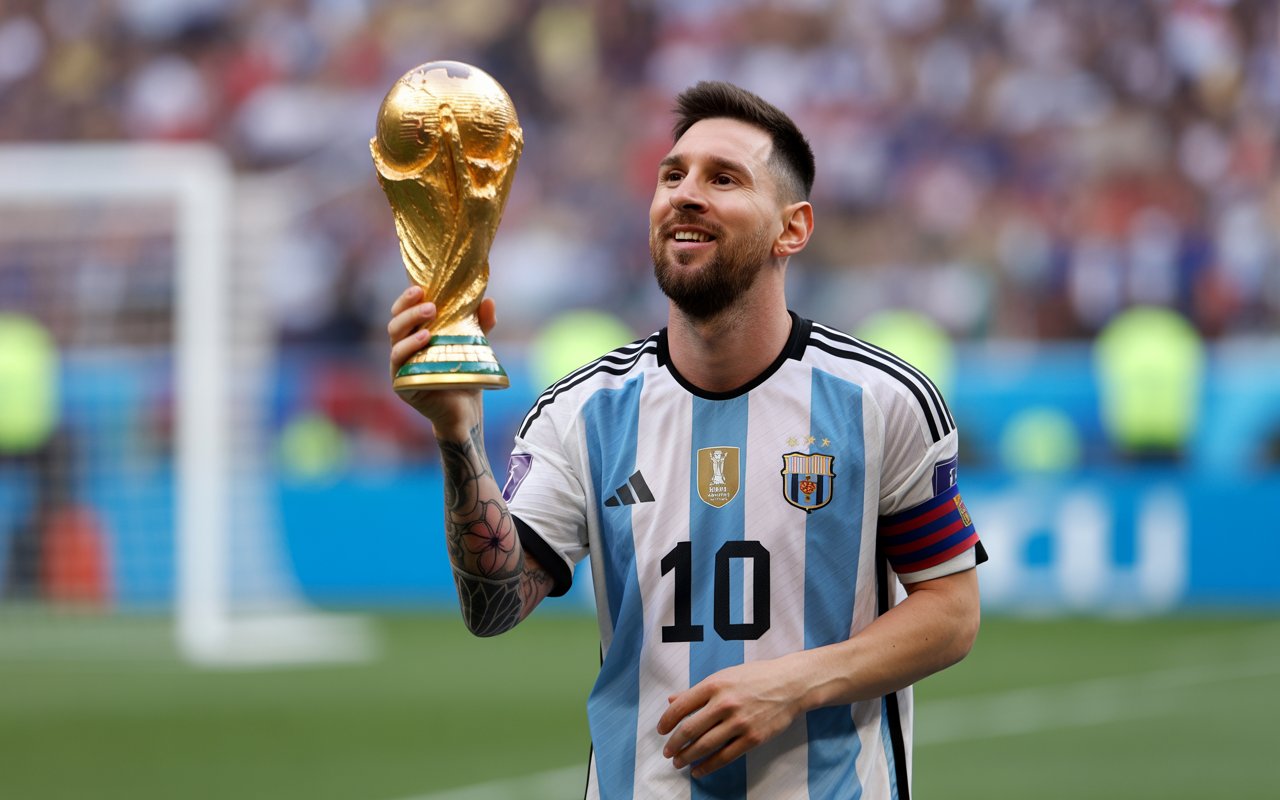
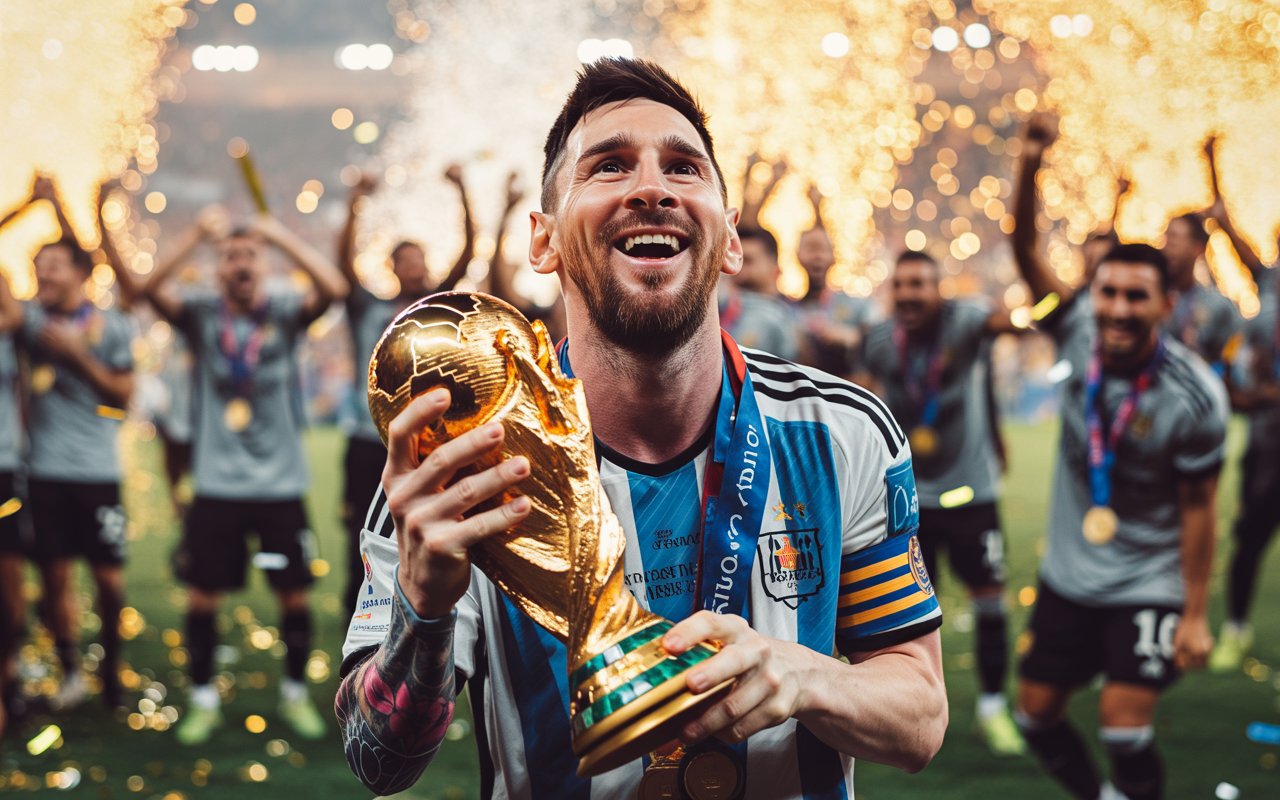
The final against France was one for the ages. Messi scored twice, and the match ended 3-3 after extra time. The world held its breath as the game went to penalties. Argentina triumphed, and at long last, Messi lifted the trophy that had eluded him for so long.
It was a storybook ending, one that cemented his status as arguably the greatest footballer of all time.
Messi vs. Maradona: The Eternal Debate

For decades, Argentinians debated who was greater: Diego Maradona or Lionel Messi. Maradona had delivered Argentina the 1986 World Cup with iconic moments like the “Hand of God” and the “Goal of the Century.” Messi, on the other hand, dominated club football but lacked that international crown.
Qatar 2022 finally silenced many doubters. With Messi’s victory, the comparison became less about rivalry and more about legacy. Both men gave Argentina unforgettable joy, each in his own way.
The Emotional Weight of the Trophy
For Messi, winning the World Cup wasn’t just about personal glory—it was about validation. Imagine carrying the hopes of an entire nation for nearly two decades, constantly compared to legends, constantly reminded of near misses. When he finally kissed the trophy, it wasn’t just a triumph; it was liberation.
That moment resonated with millions around the world. It showed that even the greatest among us need persistence, patience, and a bit of destiny on their side.
The Impact Beyond Football
Messi’s World Cup win transcended sports. Streets across Argentina erupted in celebrations that lasted for days. Fans traveled from all over the world to witness history. Social media exploded with images of Messi holding the trophy aloft, wearing a smile that spoke louder than words.
It also gave inspiration to countless young athletes. The message was clear: never give up on your dreams, no matter how many setbacks you face.
The Legacy of Messi’s World Cup
What will Messi’s World Cup legacy be remembered for? Not just the goals, assists, or awards—but the journey itself. From a teenage prodigy to a seasoned veteran, his story is about resilience and redemption.
In many ways, Messi’s World Cup journey mirrors life itself: full of ups and downs, heartbreaks, and unexpected triumphs. It reminds us that persistence often leads to the sweetest victories.
Why Messi’s World Cup Matters to the World
Even if you’re not a football fan, Messi’s story strikes a chord. It’s about the universal human desire to achieve something bigger than oneself. It’s about dreams, setbacks, and the ultimate triumph of hope.
Think of it like a marathon. Sometimes you stumble, sometimes you lag behind, but if you keep pushing, the finish line becomes a reality. Messi’s journey is proof of that.
Conclusion: A Story That Will Live Forever
Messi’s World Cup triumph isn’t just a sports story—it’s a piece of history. For Argentina, it ended a 36-year wait for glory. For Messi, it was the crowning moment of a career filled with brilliance. For the world, it was a reminder that perseverance pays off.
When future generations look back, they won’t just remember Messi as a footballer. They’ll remember him as the man who chased a dream and finally caught it, giving the world one of the most unforgettable stories in sports history.
FAQs
1. How many World Cups did Messi play in?
Messi played in five World Cups: 2006, 2010, 2014, 2018, and 2022.
2. Did Messi win the Golden Ball in the World Cup?
Yes, Messi won the Golden Ball twice—once in 2014 and again in 2022, making him the only player to win it twice.
3. How many goals did Messi score in World Cups?
Messi scored 13 goals across his five World Cup appearances.
4. Why was Qatar 2022 so special for Messi?
It was Messi’s final World Cup, and winning it fulfilled his lifelong dream while also securing his legacy as one of the greatest players ever.
5. How does Messi’s World Cup win compare to Maradona’s in 1986?
Both victories hold immense significance. Maradona’s was iconic for his individual brilliance, while Messi’s was about leadership, resilience, and uniting his team to triumph.