




Have you ever picked up a ball of yarn, stared at a crochet hook, and wondered where on earth to begin? Or maybe you’ve already crocheted a scarf or two and want your next projects to look neater and more polished without being complicated. That’s where the half double crochet stitch comes in. It’s one of those techniques that feels like a “sweet spot” in crafting — not as short as a single stitch, not as tall as a double one, but perfectly balanced in between.
In this guide, we’re going to explore this stitch from every angle: how it works, why people love it, when to use it, and how to avoid the common mistakes that make beginners groan. Think of this article as your friendly crafting buddy sitting beside you, cheering every loop and yarn-over you make.
What Exactly Is Half Double Crochet?
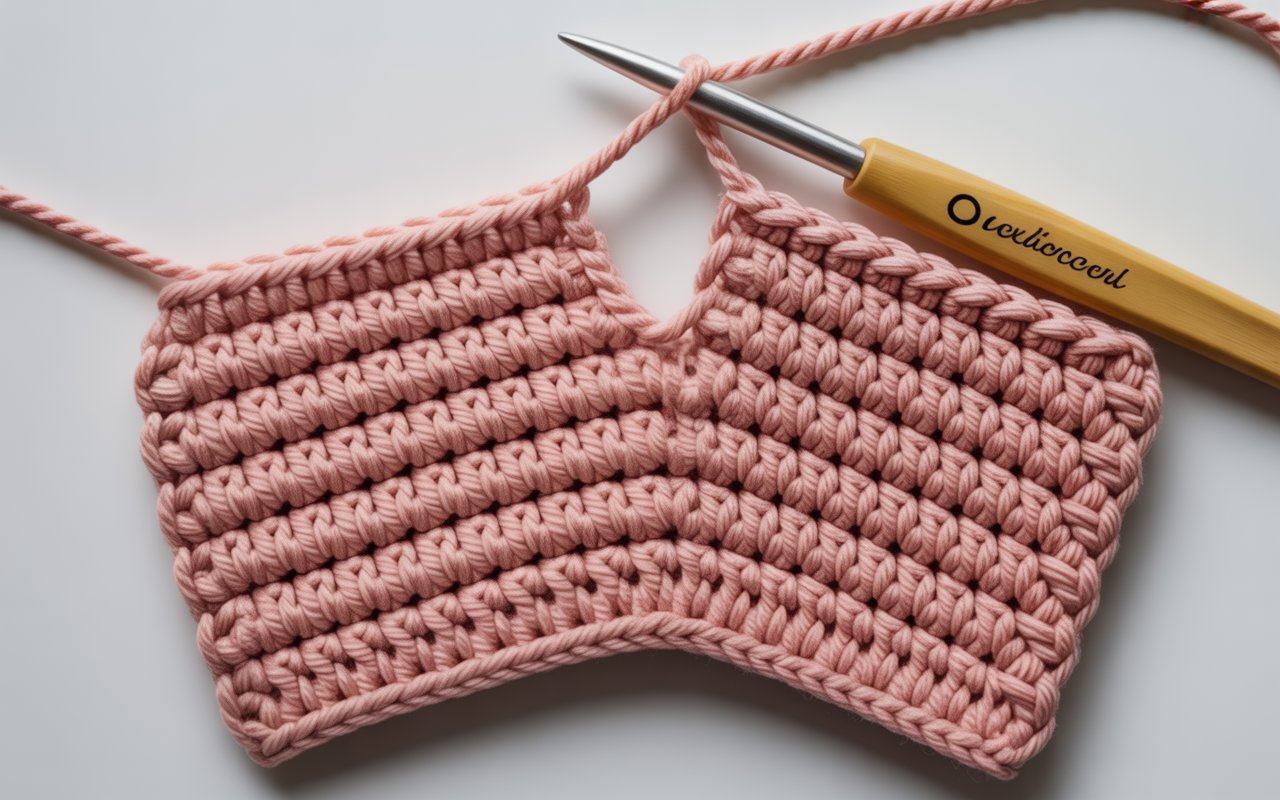
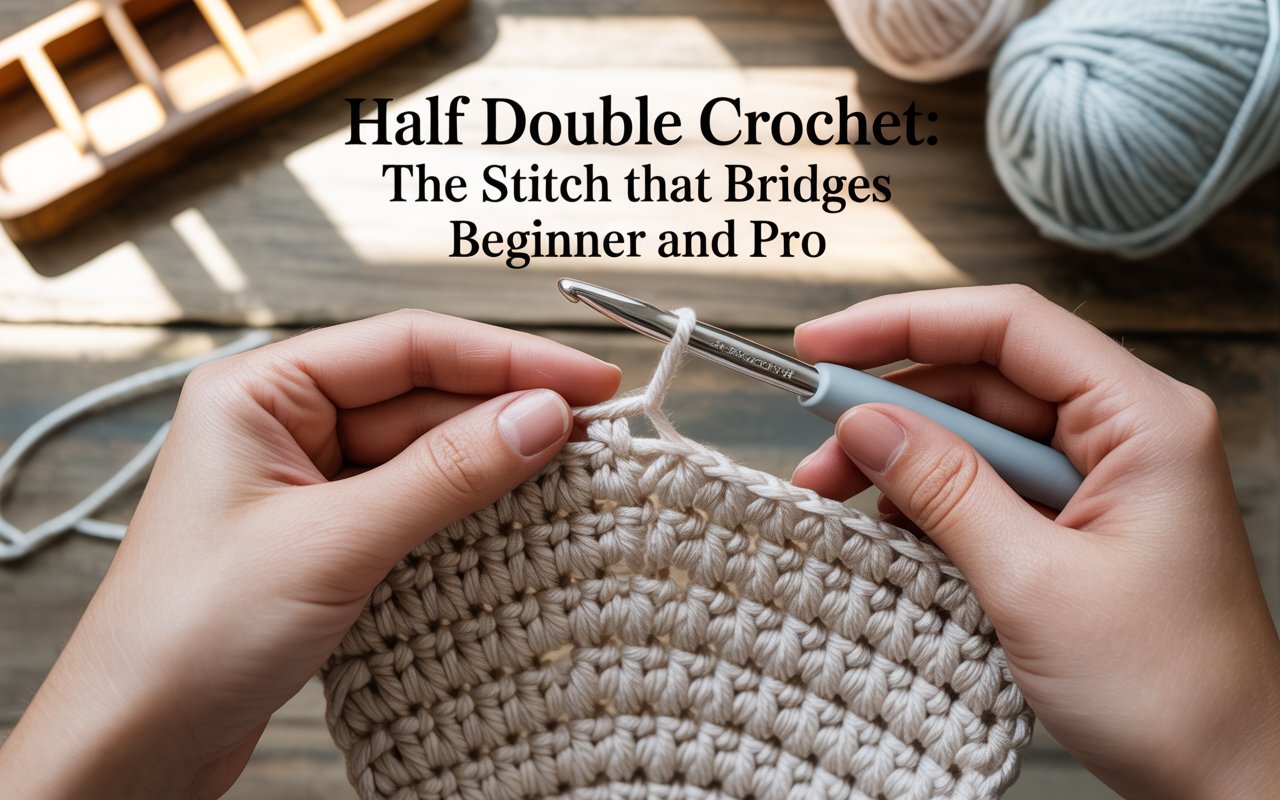
At its core, half double crochet is a middle-height stitch. In the crochet family, stitches increase in height like this: slip stitch, single, half double, double, and then taller ones like treble. Our star today sits right in the middle — offering more texture than shorter stitches and more control than taller ones.
When you work this stitch, you yarn over once, pull a loop through your fabric, and then pull the yarn through all three loops on your hook in a single motion. That action alone gives the stitch its unique personality: slightly plush, slightly flat, and wonderfully consistent.
Why Does It Feel So Versatile?
Because it behaves like a chameleon. Depending on your tension and yarn choice, it can look soft and drapey or firm and structured. You can use it for cozy hats, warm blankets, textured sweaters, or even home décor like cushion covers.
If single crochet is a whisper and double crochet is a conversation, half double crochet is the perfect speaking voice — calm, steady, and gets the job done beautifully.
A Brief History of Crochet Stitches
Crochet itself has roots going back centuries, with different techniques popping up across cultures. While exact records are fuzzy, historians believe early crochet-like methods appeared in places like China, South America, and the Middle East before spreading through Europe.
Half-height stitches evolved naturally as crocheters experimented. Once people mastered short and tall stitches, a blend in the middle just made sense. Over time, half double crochet became standardized in pattern language, especially in modern pattern writing.
Fun fact: in the UK, this stitch goes by a different name. What Americans call “half double crochet” is called “half treble crochet” in British patterns. Confusing? Yes, at first. But once you know, you’re bilingual in yarn-speak.
A simple walkthrough to master the half double crochet stitch from start to finish
Let’s walk through it as simply as possible. You only need three basic moves:
-
Yarn over (wrap yarn around the hook once).
-
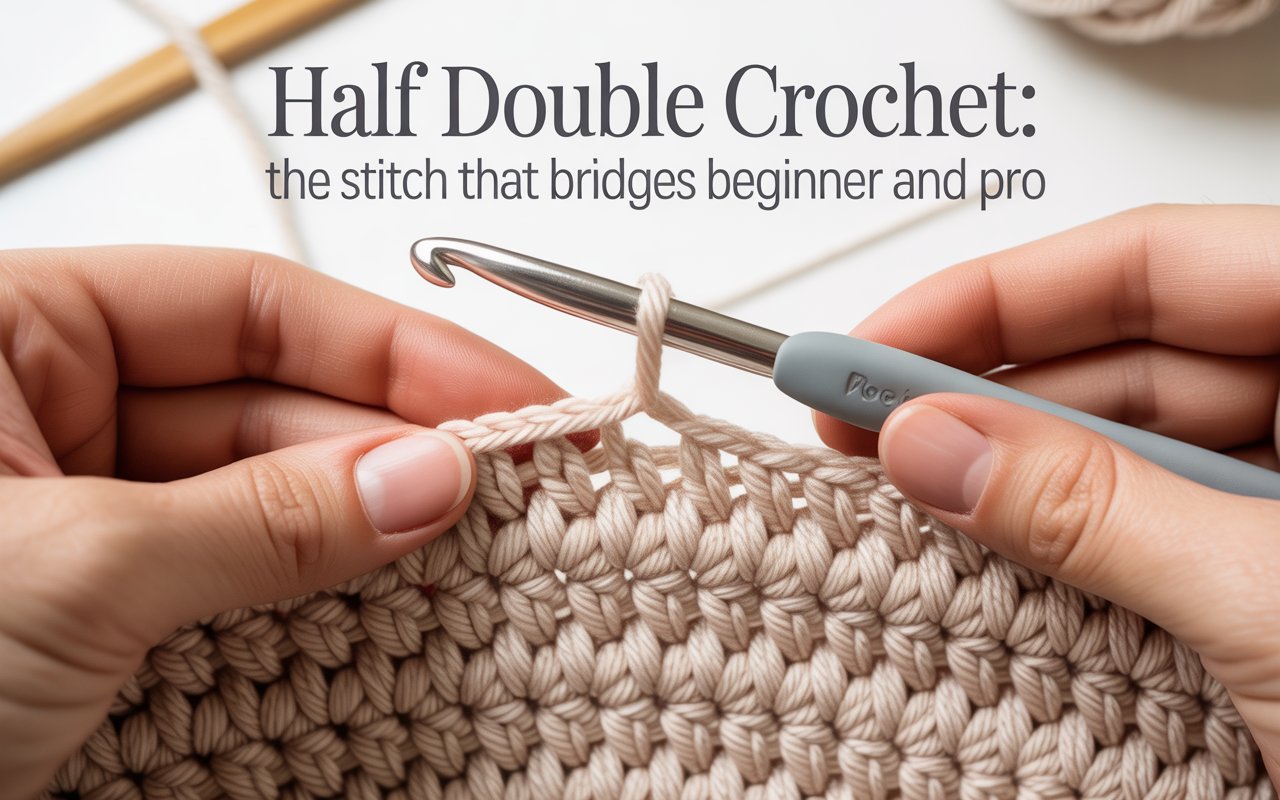
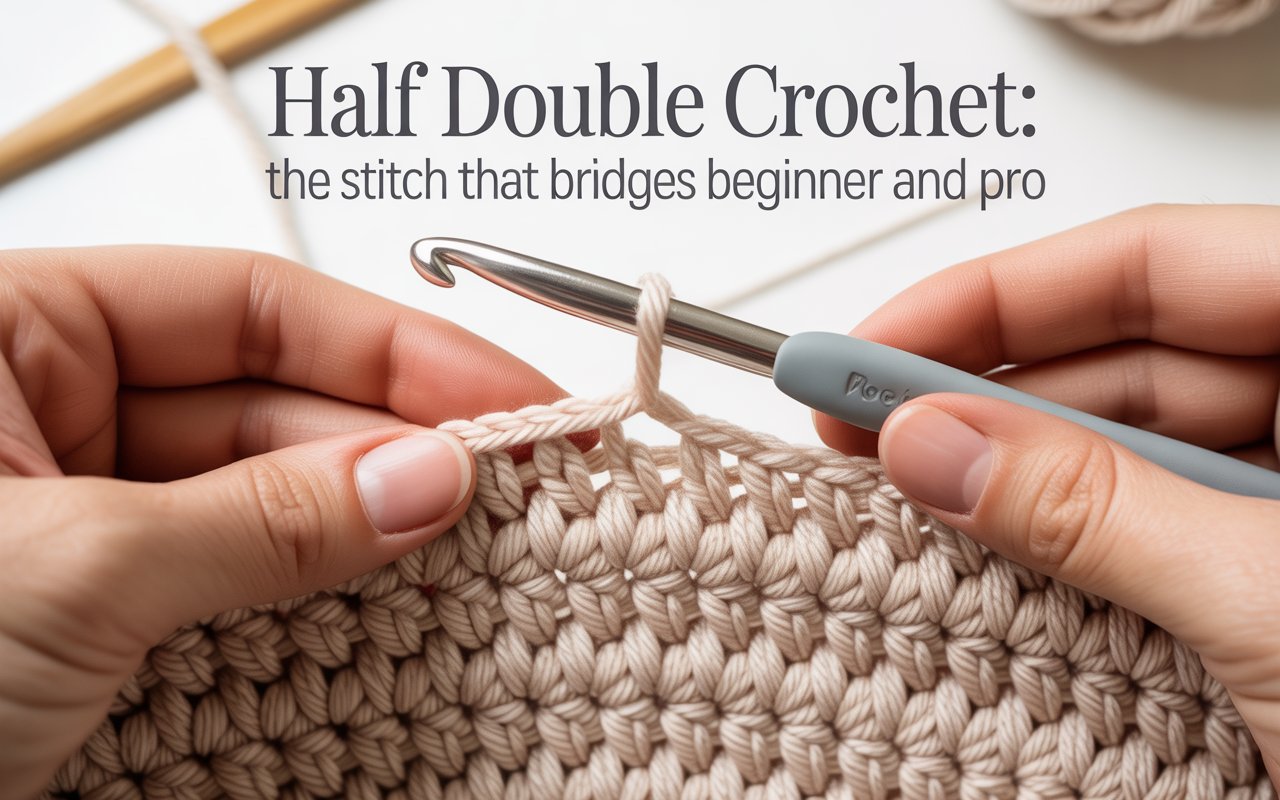
Insert the hook into the stitch, yarn over again, and pull through (you’ll now have three loops on your hook).
-
Wrap the yarn and glide it smoothly through all three loops in one motion.
That’s it! You’ve made your first half double crochet stitch.
What It Feels Like in Action
When you do it correctly, the movement feels smooth and rhythmic. Unlike double crochet, where you pull through loops in stages, here it’s a single satisfying swoop.
It’s like tying your shoelaces in one confident pull instead of two separate steps.
Why Crafters Love It So Much
1. Speed Without Sloppiness
Half double crochet works up faster than tighter stitches. You get visible progress that’s motivating, but without the loose look taller stitches sometimes create.
2. Balanced Texture
The fabric it creates is soft yet strong. It doesn’t bunch like shorter stitches or open up too much like taller ones.
3. Beginner-Friendly
With just one extra motion compared to single crochet, it’s easy to learn. Many people master it within minutes.
4. Great for Warm Projects
The stitch forms a dense fabric that traps warmth — ideal for scarves, hats, and blankets.
Understanding Yarn and Hook Choices
Not all yarn behaves the same. Chunky wool will give you thick, bold stitches, while thin cotton creates a lighter look.
Yarn Types That Work Best
-
Acrylic: Affordable and easy-care
-
Wool: Cozy and warm
-
Cotton: Crisp and great for summer projects
-
Blends: Best of both worlds
Hook Size Matters
A larger hook gives you looser stitches and more drape. A smaller hook makes the fabric tighter and sturdier. Most patterns recommend a size, but you’re always free to experiment.
Think of it like cooking pasta — follow the recipe at first, then adjust to taste later.
Common Mistakes (And How to Fix Them)
Mistake 1: Forgetting the First Yarn Over
Many beginners skip the initial yarn over, turning their stitch into something else entirely.
Fix: Say it out loud at first — “Yarn over, insert, yarn over, pull through all.”
Mistake 2: Uneven Tension
If stitches look messy, your grip may change as you work.
Fix: Relax your hands. Yarn should flow, not fight.
Mistake 3: Missing Stitches at the Ends
Edges often shrink because people skip the final stitch in a row.
Fix: Use a stitch marker on the first or last stitch of every row.
Half Double Crochet in Everyday Projects
Let’s talk real-world uses.
Blankets
This stitch makes thick, warm throws that feel luxurious. It’s great for baby blankets because it’s soft but sturdy.
Hats
The fabric has enough elasticity to stretch comfortably around your head.
Sweaters
Because it’s not too stiff, garments made with this stitch drape nicely without sagging.
Bags and Pouches
When worked tightly, it produces a strong fabric for totes and storage items.
Variations That Add Personality
Once you’ve learned the basic stitch, there are fun twists you can try.
Back Loop Only
Creates ribbing — great for cuffs and hats.
Third Loop Technique
Adds a knit-like texture to your work.
Extended Version
Adds a tiny bit of height for more drape.
These variations keep projects exciting without needing brand-new skills.
Texture, Drape, and Design Explained Simply
When you crochet, you’re basically building fabric one loop at a time. Half double crochet builds a “medium-thick wall” of fabric.
-
Texture: Soft ridges with a gentle pattern
-
Drape: Falls nicely without stiffness
-
Design Impact: Makes colors pop and stripes stand out
Imagine spreading frosting on a cake — not too thin, not too heavy. Just right.
How This Stitch Impacts Your Finishing Work
Half double crochet gives clean edges and smooth surfaces, which makes sewing pieces together easier. You won’t struggle aligning rows or hiding seams.
Because the fabric is even, you’ll notice your projects look more “store-bought” and less “homemade” in the best way.
Growing Confidence Through Practice
Here’s the truth: your first few rows may look wonky. That’s normal. Every crocheter’s journey begins with crooked edges and uneven tension.
The magic happens when muscle memory kicks in. One day, you’ll suddenly realize your hands know exactly what to do — without you even thinking.
That’s when crafting transforms from effort to enjoyment.
Half Double Crochet vs. Other Stitches
Let’s put it in perspective:
-
Compared to single: Taller and softer
-
Compared to double: Tighter and stronger
-
Compared to treble: Denser and warmer
Each stitch has its role, but half double crochet is the all-rounder — reliable, flexible, and stylish.
Tips for Making Your Work Look Professional
-
Keep your edges straight with markers
-
Count stitches every row
-
Match hook size to yarn weight
-
Practice on small swatches
-
Don’t rush — enjoy the rhythm
Crochet isn’t just about the finished piece. It’s about the calm moments in between.
Conclusion: A Stitch You’ll Return To Again and Again
Half double crochet is more than just a technique — it’s a gateway. It bridges beginners to advanced skills with ease and elegance. Whether you’re crafting gifts, decorating your home, or simply enjoying quiet evenings with yarn in hand, this stitch will become one of your closest companions.
It’s simple enough to learn today and versatile enough to use forever. And who doesn’t love a skill like that?
FAQs
1. Is half double crochet suitable for complete beginners?
Yes! It’s easy to learn and builds confidence fast.
2. Why does my fabric curl at the edges?
That usually means your tension is too tight or your hook is too small.
3. Can this stitch replace single or double crochet in patterns?
Sometimes, but it may change size and texture. Test first.
4. How do I make my stitches more even?
Practice and keep your grip relaxed.
5. What projects are best for this stitch?
Blankets, hats, scarves, and sweaters are perfect starting points.