






Parting with someone you love is one of life’s deepest heartaches.. In the Philippines, funerals are more than just ceremonies—they are deeply woven into the cultural fabric, carrying with them centuries of tradition, faith, and family values. If you’ve ever wondered why Filipino funerals are often long, emotional, and communal, this article will walk you through everything you need to know. From customs and rituals to modern practices, let’s dive into this meaningful part of Filipino life.
The Meaning of Funerals in Filipino Culture
Filipinos see funerals not just as an ending, but as a journey for the departed soul. It’s a time to grieve, yes, but also to honor the life lived and to strengthen family ties. Death is viewed with both sorrow and reverence, blending Catholic beliefs, indigenous practices, and even modern influences.
Imagine a patchwork quilt—each piece represents a tradition, belief, or ritual, stitched together into something uniquely Filipino. That’s how funerals feel: a merging of different influences that together create something meaningful.
Historical Roots of Filipino Funeral Practices
Before the Spanish colonization, ancient Filipinos already had elaborate burial customs. They practiced secondary burials, where bones were cleaned and placed in jars. Certain tribes laid their departed to rest in boats, a vessel guiding the soul toward its eternal voyage.
When Catholicism spread in the 16th century, funeral traditions changed but didn’t erase the old ways. Instead, they blended. Today’s Filipino funerals reflect this rich history, combining religious rites with indigenous practices and family-centered rituals.
The Wake (Lamay): A Gathering of Hearts

What is a lamay?
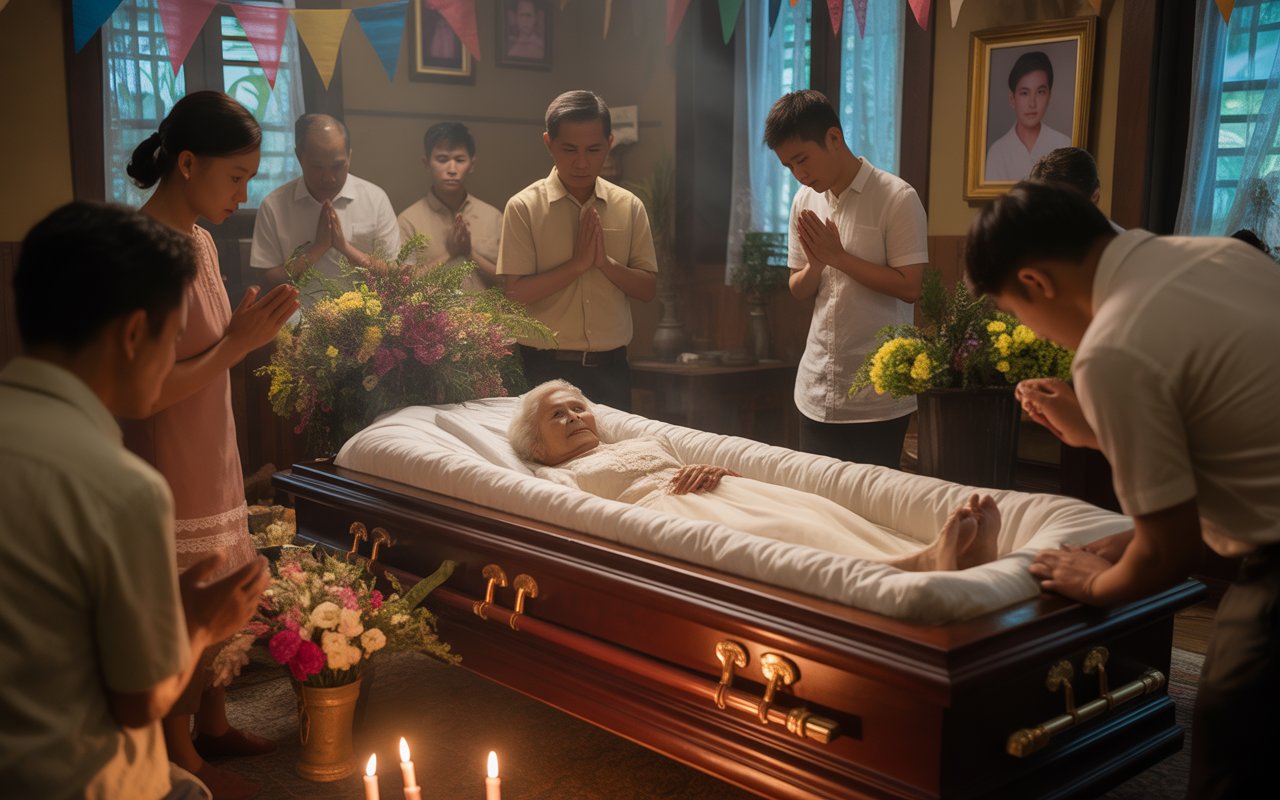
A lamay is a wake that stretches over several days, sometimes lasting from three nights to a full week or beyond. Unlike in many Western countries where wakes are short, Filipino wakes are long, giving people time to visit, offer prayers, and support the grieving family.
Why so long?
The extended wake gives distant relatives and friends a chance to travel and pay their respects. It’s also rooted in belief: keeping vigil over the deceased helps guide the soul and protects the living from bad spirits.
The atmosphere at a lamay
Interestingly, lamays are not always solemn. While prayers and tears are present, you’ll also hear laughter, storytelling, and sometimes even karaoke. It’s part of the Filipino way of celebrating life even in the face of death.
Religious Rituals and Prayers
Religion plays a central role in Filipino funerals. Since most Filipinos are Catholic, masses, novenas, and rosaries are key parts of the process.
-
Novenas: Nine days of prayer for the soul’s peace.
-
Requiem Mass: A solemn funeral liturgy offered before the final rites of burial or cremation.
-
Blessings: Holy water and incense are often used to sanctify the coffin.
For non-Catholics, practices may differ. Protestants, Muslims, and indigenous groups have their own distinct rituals, yet all share the same intention: to honor the departed and provide comfort to the family.
Family and Community Support
For Filipinos, sorrow is never meant to be borne in solitude. Family members gather not only to mourn but also to care for practical needs—food, funeral arrangements, and financial support. Neighbors, friends, and even distant relatives often contribute donations called abuloy to ease the family’s expenses.
This culture of bayanihan (communal unity) ensures that no one feels abandoned during such a difficult time.
Food and Hospitality at Wakes

A wake in the Philippines is incomplete without food. Families provide meals and snacks for visitors, sometimes cooking for days. Common dishes include pancit (noodles symbolizing long life), bread, coffee, and rice meals.
Why food? Sharing meals during a wake symbolizes comfort and togetherness. It gives mourners strength and helps sustain them through long nights of prayers and conversations.
Superstitions and Beliefs
Filipino funerals are rich with superstitions, many of which are still practiced today. Some of the most common include:
-
Sweeping the floor during a wake is avoided, as it is believed to sweep away blessings or good fortune.
-
Covering mirrors to prevent the soul from being trapped.
-
Mourners traditionally dress in black or white to symbolize grief and respect for the departed
-
Avoiding tears falling on the coffin, believed to make it harder for the spirit to move on.
These customs may sound unusual to outsiders, but they carry deep meaning for families who practice them.
Burial Practices and Cemeteries
In the Philippines, burial remains the most common practice, although cremation has become more popular in urban areas. The funeral procession often involves marching from the wake to the church and then to the cemetery.
Cemeteries in the Philippines vary widely: from elaborate mausoleums for wealthy families to stacked tombs in public cemeteries where space is scarce. All reflect the Filipino desire to keep their loved ones close and remembered.
Modern Changes and Urban Adaptations
With modernization, funerals in the Philippines are evolving. Funeral homes now offer professional services, livestreaming is available for relatives abroad, and cremation is more widely accepted.
However, even with these changes, the heart of the tradition—family, faith, and community—remains the same. Filipinos adapt new practices without losing sight of their cultural roots.
Funerals as a Celebration of Life
More than mourning, Filipino funerals often feel like a celebration. Families create photo displays, play favorite music of the deceased, and share stories. The idea is to remember the good times and celebrate the legacy left behind.
It’s a reminder that death, while painful, is not just about loss—it’s also about gratitude for the life that was shared.
Cost of Funerals in the Philippines
Funerals can be expensive, and costs vary depending on whether families choose burial or cremation, a simple coffin or an elaborate one, and the length of the wake.
To manage expenses, many Filipinos rely on:
-
Abuloy (donations from guests)
-
Memorial plans (prepaid funeral packages)
-
Family pooling resources
This practical side reflects the Filipino resilience—balancing financial realities with the emotional weight of saying goodbye.
The Emotional Side of Farewells
Finally, beyond rituals and customs, funerals in the Philippines are deeply emotional. They give families a space to cry, laugh, pray, and heal together. The long wakes, endless visitors, and shared meals all serve one purpose: to remind the grieving that they are never alone.
In this way, Filipino funerals are not just about death—they’re about love, connection, and community.
FAQs
1. Why are wakes in the Philippines so long?
Wakes can last for several days to give time for family and friends—often coming from far places—to pay their respects and support the grieving family.
2. What is the purpose of novena prayers after death?
The nine days of prayer (novena) are meant to help the soul of the departed find peace and strengthen the faith of the family.
3. Why do people give money during funerals in the Philippines?
This financial gift, called abuloy, helps ease the family’s expenses and shows solidarity during a difficult time.
4. Are cremations common in the Philippines?
Cremation is becoming more common, especially in urban areas, though traditional burial is still widely practiced.
5. Why do some Filipino funerals feel like a celebration?
Many families choose to focus on celebrating the life lived—through stories, music, and shared memories—making the farewell both meaningful and uplifting.
Conclusion
Funerals in the Philippines are more than ceremonies—they are heartfelt journeys filled with faith, tradition, and togetherness. From the lamay to the burial, every step reflects the Filipino values of family, hospitality, and resilience.
While practices may change with time, the essence remains the same: honoring life, comforting the living, and guiding the departed with dignity and love.