






Air travel is often seen as the fastest and most convenient way to move across countries or even continents. But every now and then, that smooth journey comes to a halt—not because of weather, technical problems, or delays—but because the very people who keep airports running decide to stop working. That’s when you hear the phrase “airport strike.”
If you’ve ever been caught up in one, you’ll know it feels like being stuck in traffic on the runway—except you can’t move forward, and you’re not even sure when the road will clear. So why do airport strikes happen? What do they mean for passengers, airlines, and even the global economy? And more importantly, how can you prepare yourself if you find your holiday or business trip caught in the middle of one?
This article takes you step by step through the world of airport strikes, explaining the why, how, and what next in a way that’s easy to follow and useful for everyday travelers like you and me.
What Exactly Is an Airport Strike?
An airport strike happens when airport workers—such as baggage handlers, security staff, ground crew, or even air traffic controllers—refuse to work as a form of protest. This isn’t about laziness; it’s usually part of an organized action to push for better working conditions, fair pay, or safer workplaces.
Think of it as a group of essential workers pulling the emergency brake on a train. By stopping the system, they send a strong signal that something needs urgent attention.
Who Usually Goes on Strike at Airports?
Not everyone at an airport wears the same hat. In fact, there are many moving parts behind your smooth journey. When a strike happens, it could involve:
-
Ground staff – the behind-the-scenes team managing baggage, check-in counters, and boarding gates to keep the passenger flow smooth.
-
Security officers – the ones ensuring safe screenings.
-
Air traffic controllers – often called the “invisible pilots,” guiding planes in the sky.
-
Cabin crews or pilots – though technically employed by airlines, their walkouts also affect airport operations.
Each group plays a different role, but when even one stops, the chain reaction can bring flights to a standstill.
Why Do Airport Strikes Happen?
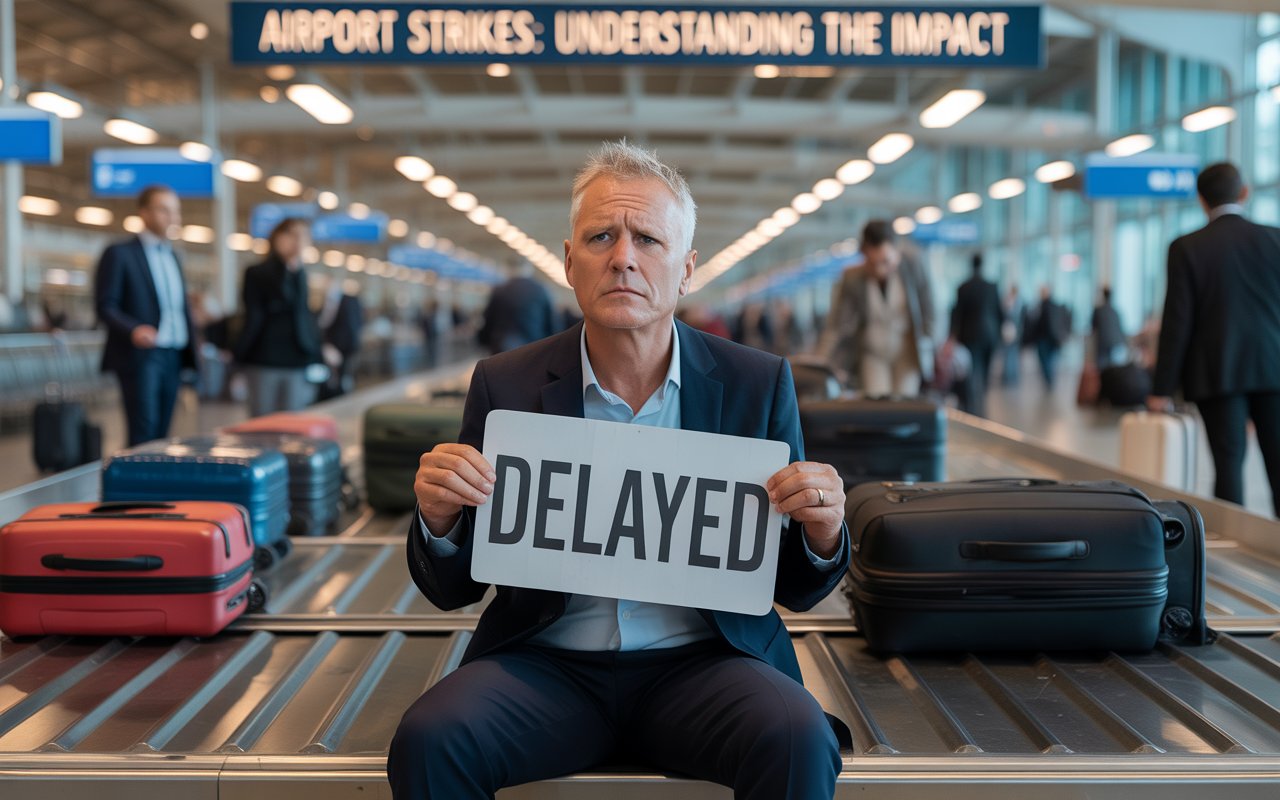
Strikes don’t just appear out of thin air. They are usually the result of long-brewing issues. Some of the most common reasons include:
-
Pay disputes – workers asking for fair wages that keep up with living costs.
-
Working conditions – long hours, night shifts, and stressful environments can push employees to protest.
-
Job security – fears of layoffs or outsourcing can spark strikes.
-
Safety concerns – in jobs as sensitive as air traffic control or security, unsafe conditions can put both workers and passengers at risk.
If you think about it, strikes are like a pressure cooker. When the heat builds up and there’s no release, eventually the lid blows.
How Airport Strikes Affect Passengers
For travelers, airport strikes can feel like having your holiday rug pulled out from under you. Some of the most common consequences are:
-
Flight cancellations – entire schedules can be wiped out for the day.
-
Long delays – even if flights aren’t canceled, reduced staff means slower operations.
-
Crowded terminals – thousands of stranded passengers in one space is a recipe for stress.
-
Missed connections – travelers on multi-leg journeys risk being stuck halfway.
Imagine planning your dream vacation, only to spend the first 24 hours sleeping on an airport bench. That’s the harsh reality some people face.
The Wider Impact Beyond Travelers
It’s not just holidaymakers or businesspeople who feel the impact of a strike. The ripples spread far wider:
-
Airlines lose millions in revenue and compensation payouts.
-
Airports themselves face reputational damage and logistical headaches.
-
Tourism industries—hotels, restaurants, tour operators—see a sudden drop in customers.
-
Economies feel the pinch when trade and cargo flights are disrupted.
To put it simply, when an airport sneezes, an entire country can catch a cold.
How Airlines Respond to Strikes
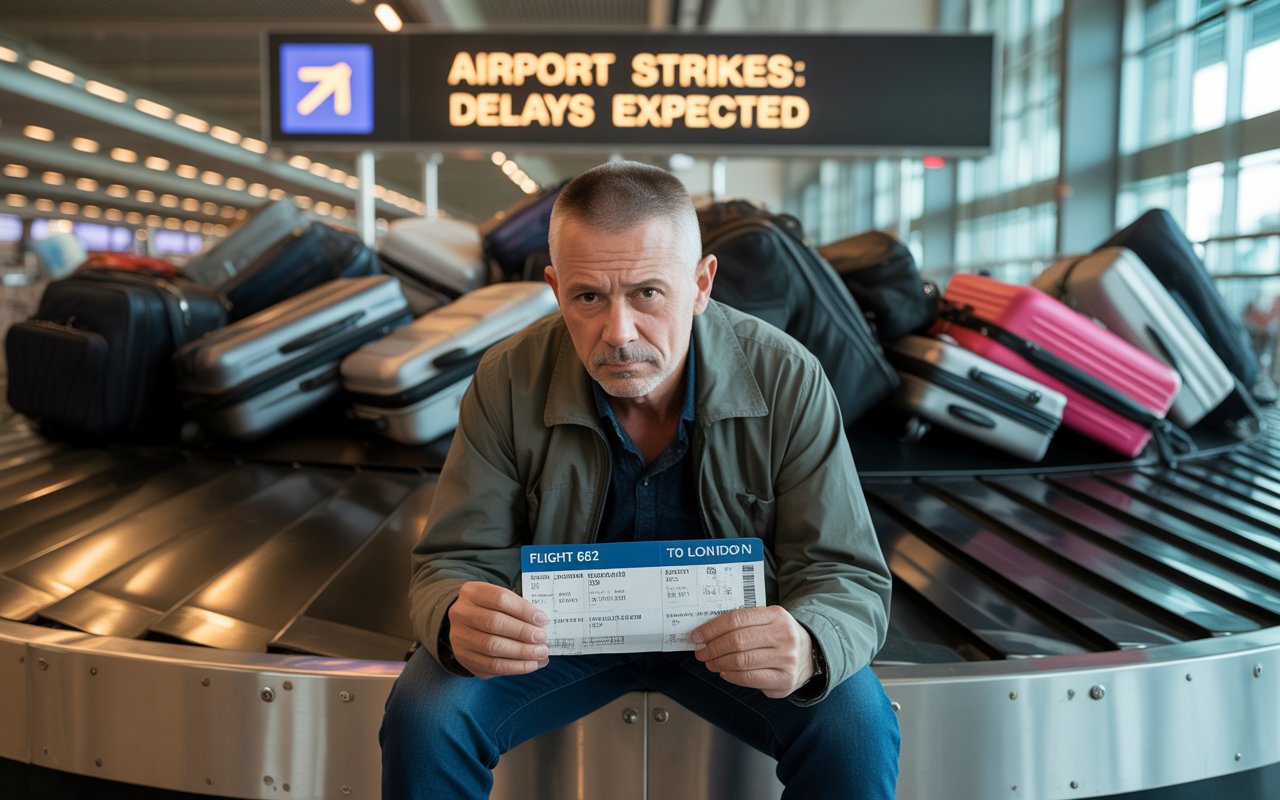
Airlines don’t like strikes any more than passengers do. They often respond with a mix of strategies:
-
Rebooking passengers on later flights.
-
Arranging alternative routes through unaffected airports.
-
Offering refunds or vouchers to soften the blow.
-
Communicating updates through apps, emails, and text messages.
Still, no matter how well-prepared an airline is, strikes always create a mess that can’t be fully cleaned up until normal work resumes.
What Travelers Can Do During an Airport Strike
Getting caught up in a strike doesn’t mean you’re completely powerless. Here are some smart moves you can make to ease the disruption:
-
Check strike announcements early – before heading to the airport.
-
Stay flexible – keep alternative travel options in mind.
-
Pack essentials in your hand luggage – snacks, chargers, and toiletries can make delays bearable.
-
Use travel insurance – many policies cover strike-related disruptions.
-
Stay calm and polite – remember, the frontline staff you see may not even be part of the strike.
Think of it like being caught in a storm. You can’t control the storm, but you can be ready with a raincoat.
Famous Airport Strikes That Made Headlines
Airport strikes aren’t new—they’ve made global headlines many times. Some notable examples include:
-
France – known for frequent air traffic controller strikes, often causing chaos across Europe.
-
Germany – where security staff walkouts have left passengers stranded in major hubs like Frankfurt.
-
United States – strikes and walkouts during labor disputes in the aviation industry.
-
Spain and Italy – periodic strikes from ground and cabin staff affecting holidaymakers.
Each strike highlights the same truth: airports are complex ecosystems that rely on every worker showing up.
The Legal Side of Airport Strikes
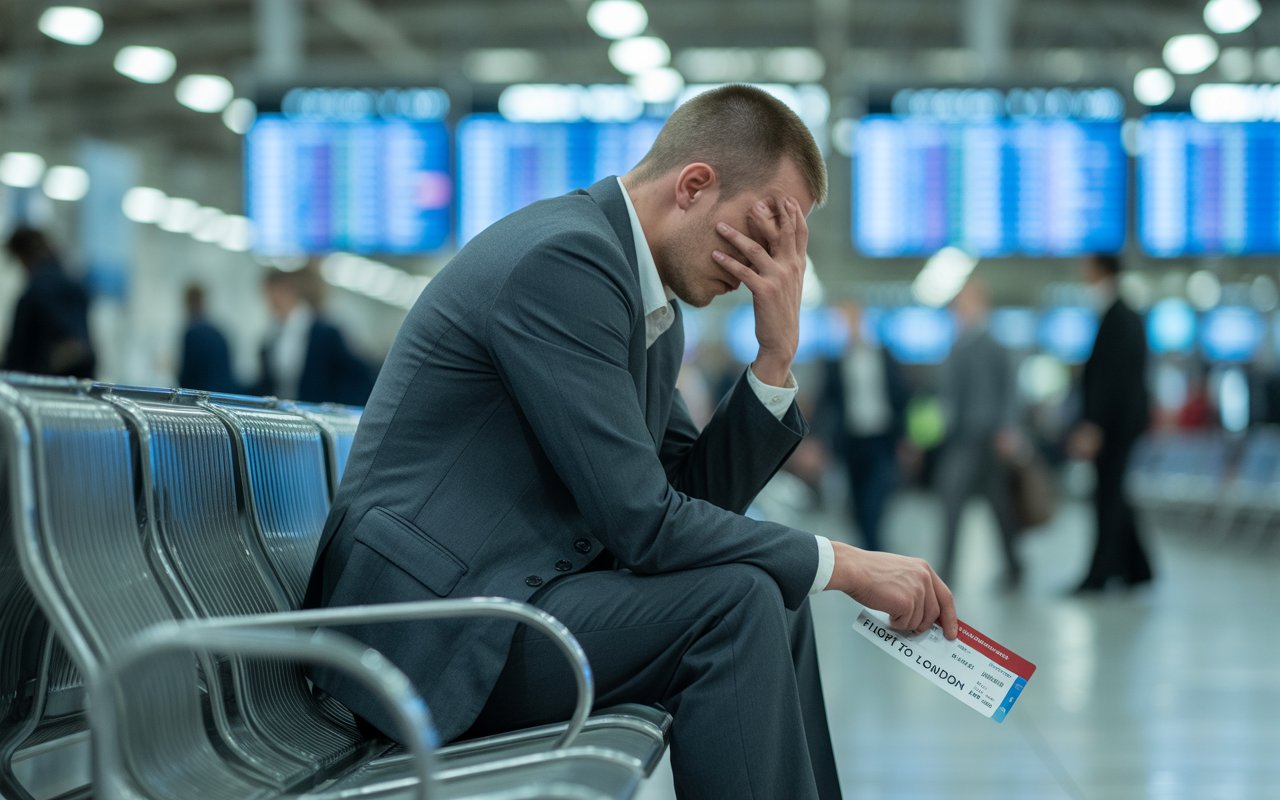
Not all strikes are allowed everywhere. Labor laws vary by country. In some places, like the U.S., certain workers (like air traffic controllers) face heavy restrictions. In Europe, labor unions have more freedom to organize strikes.
The legal framework matters because it shapes how often strikes happen, how long they last, and what protections passengers have when they do.
The Role of Unions and Collective Bargaining
Behind most airport strikes are unions—organized groups that represent workers. They sit down with employers to bargain for fair pay, safer workplaces, and better overall job terms. When talks break down, strikes become the last resort.
Unions are sometimes criticized for causing disruption, but they also play a vital role in giving workers a voice in industries where safety and precision are non-negotiable.
Technology and the Future of Airport Strikes
As airports become more automated—with self-check-in kiosks, biometric scanners, and even robotic baggage handlers—the question arises: will strikes still have the same impact?
While technology can replace some tasks, critical roles like air traffic control, security checks, and emergency handling still require humans. So even in the age of automation, strikes are unlikely to disappear entirely.
How to Prepare for the Possibility of a Strike
Since strikes are sometimes announced days in advance, being proactive helps:
-
Sign up for airline alerts to get real-time updates.
-
Download airport apps for live schedules.
-
Have a backup travel plan (like trains or buses if you’re traveling within Europe).
-
Book flexible tickets that allow free changes.
Preparation won’t prevent disruption, but it can make the experience far less stressful.
FAQs About Airport Strikes
1. How much notice do passengers usually get before an airport strike?
It depends on the country and the union involved. Some strikes are announced weeks in advance, while others happen suddenly with little warning.
2. Can I get compensation if my flight is canceled because of a strike?
In many regions, such as the European Union, passengers have rights to refunds or rebooking. Still, whether you’re entitled to compensation often comes down to if the strike is judged to be within the airline’s control.
3. Are all airport strikes legal?
Not always. Legality depends on local labor laws. For example, in the U.S., air traffic controllers face restrictions, while in Europe, unions have broader rights to strike.
4. Do travel insurance policies cover strike-related delays?
Yes, many policies include coverage for strikes, but it’s important to check the fine print to know exactly what’s included.
5. Will automation reduce the risk of airport strikes in the future?
Automation may reduce some disruptions, but many roles—like safety inspections and air traffic control—still need human expertise, meaning strikes will likely remain a part of aviation.
Final Thoughts
Airport strikes remind us of one simple truth: travel depends on people. Behind every safe takeoff and smooth landing are thousands of workers making it all happen. When those workers feel unheard or undervalued, they take action that sends ripples across the world.
For passengers, strikes can be frustrating, even heartbreaking when plans fall apart. But understanding why they happen and knowing how to respond can turn a helpless situation into one you can navigate with confidence.
In the end, an airport strike is less about stopping planes and more about workers demanding to be seen and respected. And that’s something worth paying attention to, whether you’re flying tomorrow or simply curious about how our global travel system works.