




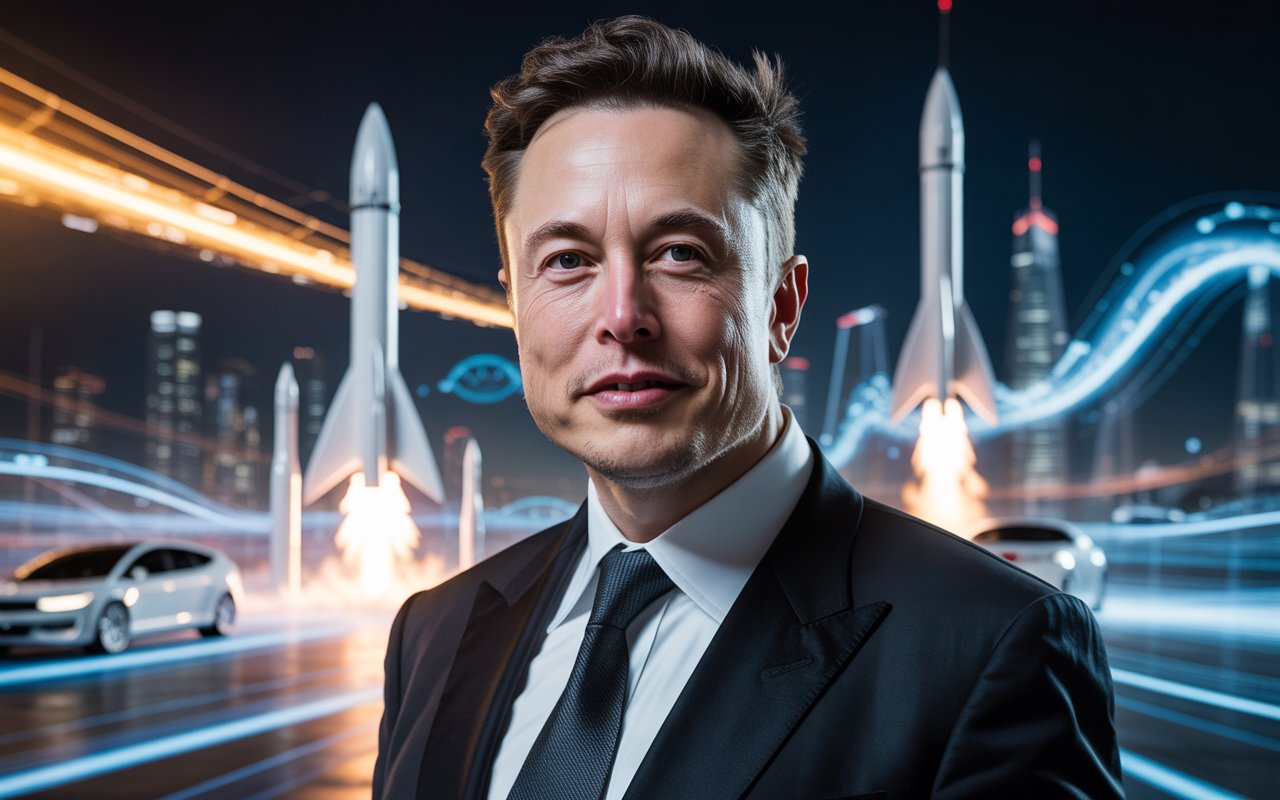

When you hear the name Elon Musk, what comes to mind? For some, it’s rockets soaring into space. For others, it’s sleek electric cars racing down highways. And for many, it’s the curiosity of what this man will think of next. Musk has become more than just a business magnate; he’s a symbol of daring ambition, resilience, and future-driven thinking.
In this article, we’ll dive into the life, work, and impact of Elon Musk—from his early years and groundbreaking companies to the controversies that spark heated debates. Whether you admire him or question his methods, there’s no denying that Musk has left a mark on technology and society unlike anyone else in modern history.
Early Life and Background
Elon Musk was born on June 28, 1971, in Pretoria, South Africa. From a young age, he displayed an unusual curiosity for technology. At the age of 12, he created and sold a video game called Blastar. Imagine being a kid who not only plays games but designs and sells them—this was Musk’s way of hinting at the extraordinary journey ahead.
Musk’s childhood wasn’t always easy. He faced bullying at school and often escaped into books and computers. He once said reading taught him how to build rockets—yes, he actually learned from encyclopedias. That kind of curiosity laid the foundation for his future ventures.
Education and Move to North America
Musk’s journey to global prominence began with his move from South Africa to Canada at 17. He attended Queen’s University in Ontario before transferring to the University of Pennsylvania, where he earned degrees in physics and economics. Physics gave him the scientific mindset, and economics gave him the business edge—a combination that would later define his unique approach to innovation.
After briefly starting a Ph.D. at Stanford University in California, Musk dropped out just two days later. Why? He saw greater opportunity in the emerging world of the internet. That bold decision marked the beginning of his entrepreneurial career.
Zip2 and PayPal: The First Ventures
Musk’s first big project was Zip2, a company that provided online city guides and maps for newspapers. In 1999, it was sold to Compaq for nearly $300 million, giving Musk his first taste of financial success.
But he didn’t stop there. He co-founded X.com, an online payment company that eventually became PayPal after a merger. By 2002, PayPal was sold to eBay for $1.5 billion. Musk walked away with a fortune, but more importantly, with the resources and confidence to pursue much bigger dreams.
SpaceX: Making Space Travel Possible
When Musk founded SpaceX in 2002, many thought he was crazy. At that time, private space companies were almost unheard of. His mission? To reduce the cost of space travel and eventually enable humans to live on other planets.
SpaceX’s journey wasn’t smooth. The first three rocket launches failed, draining money and morale. Yet Musk pushed forward. On the fourth attempt in 2008, SpaceX successfully launched its Falcon 1 rocket into orbit. That victory secured a contract with NASA and kept the dream alive.
Today, SpaceX is a leader in space exploration. Its reusable rockets have revolutionized the industry, and its Starship project aims to take humans to Mars. Think about it: what once seemed like science fiction is now a concrete plan.
Tesla: Driving the Future of Transportation
In 2004, Musk joined Tesla Motors (founded by Martin Eberhard and Marc Tarpenning) as its chairman and later became CEO. Tesla’s goal was simple yet revolutionary: to make electric cars cool, efficient, and affordable.
The Tesla Roadster was the company’s first hit, followed by the popular Model S, Model X, Model 3, and Model Y. These vehicles combined sleek design with cutting-edge battery technology. Tesla didn’t just make cars; it sparked a global shift toward sustainable transportation.
It’s worth noting that Tesla also ventured beyond cars. With solar energy products and energy storage solutions, the company positioned itself as a pioneer in renewable energy. Musk’s vision is clear: a world less dependent on fossil fuels.
SolarCity, Neuralink, and The Boring Company
Musk doesn’t limit himself to one industry. He founded or invested in multiple ventures aimed at solving global problems:
-
SolarCity: A solar energy company later merged with Tesla to promote sustainable power.
-
Neuralink: Focused on developing brain-machine interfaces, with the hope of treating neurological conditions and eventually merging humans with artificial intelligence.
-
The Boring Company: Launched to tackle urban congestion by creating underground transportation tunnels.
Each of these projects may sound futuristic, but they highlight Musk’s tendency to look decades ahead rather than just a few years.
Twitter (Now X): The Social Media Gamble
In 2022, Musk acquired Twitter, later rebranding it as X. His takeover sparked heated debates. Supporters applauded his push for free speech, while critics worried about misinformation and controversial policy changes.
Regardless of one’s stance, Musk’s presence in social media shows his influence isn’t limited to technology and energy—he also wields cultural power. Whether X will thrive or stumble under his leadership remains one of the most watched stories in the digital era.
Personality and Leadership Style
Musk is often described as a mix of brilliance and unpredictability. His work ethic is legendary—reports suggest he sometimes works over 80 hours a week. He’s hands-on, detail-oriented, and willing to take risks others shy away from.
But his style also attracts criticism. Former employees have described him as demanding and sometimes difficult to work with. His outspoken presence on social media has fueled controversies. In a way, Musk’s personality is like rocket fuel: it powers incredible achievements but can also cause explosive reactions.
Controversies and Criticisms
No story about Musk is complete without mentioning controversies. From clashes with regulators to bold statements on social media, he has often landed in hot water. Some of the most notable include:
-
Disputes with the SEC over Tesla-related tweets.
-
Public feuds with critics and journalists.
-
Concerns over labor practices at Tesla factories.
Yet, despite the backlash, Musk continues to push boundaries. Critics call him reckless, while fans see him as fearless. The truth likely lies somewhere in between.
Wealth and Recognition
As of recent years, Musk has frequently ranked among the world’s richest individuals, with a net worth fluctuating alongside Tesla’s stock and SpaceX’s valuation. But Musk insists that his fortune is tied to his mission, not luxury. Unlike many billionaires, he doesn’t own a massive collection of yachts or mansions. In fact, he once sold most of his real estate, claiming he wanted to “own no house.”
His wealth has enabled him to take risks few can afford—like funding rockets when experts thought it was impossible.
Influence on Technology and Society
Musk’s impact extends far beyond his companies. He has pushed industries to think differently:
-
Traditional automakers now invest heavily in electric vehicles.
-
Space agencies rely on private companies for launches.
-
Renewable energy has gained mainstream attention.
In many ways, Musk acts as a catalyst. Even when his projects face setbacks, they inspire innovation across the globe.
The Future Vision: Mars and Beyond
What drives Musk isn’t just profit—it’s the idea of ensuring humanity’s survival. His long-term vision is to make life “multi-planetary.” SpaceX’s Starship is designed to carry humans to Mars, with the hope of building a self-sustaining colony.
Some call it unrealistic, others call it visionary. But if history is any guide, Musk thrives on making the impossible possible. Whether or not we see human life on Mars in our lifetime, Musk has already expanded our imagination of what’s achievable.
Conclusion
Elon Musk is a figure who defies easy categorization. He’s an entrepreneur, engineer, dreamer, and provocateur all rolled into one. His story isn’t just about wealth or fame; it’s about daring to challenge limits.
Like a comet blazing across the sky, Musk’s journey is dazzling, controversial, and impossible to ignore. Whether you see him as a hero shaping the future or a disruptor stirring chaos, one thing is certain: Elon Musk has changed the world—and he’s not done yet.
FAQs
1. What was Elon Musk’s first successful company?
His first major success was Zip2, which provided online maps and directories for newspapers. It was sold to Compaq for nearly $300 million in 1999.
2. How did Elon Musk get involved with Tesla?
Musk invested in Tesla in 2004, becoming its chairman, and later took over as CEO. He played a key role in developing and marketing Tesla’s electric cars.
3. What is Musk’s ultimate goal with SpaceX?
Musk aims to make space travel affordable and enable humans to live on other planets, particularly Mars.
4. Why did Elon Musk buy Twitter?
He said the goal was to promote free speech and reform the platform. However, the move has been highly controversial and is still unfolding.
5. What makes Musk different from other entrepreneurs?
Musk combines scientific knowledge with bold risk-taking. Instead of focusing solely on profit, he often pursues ideas that aim to change the future of humanity.