





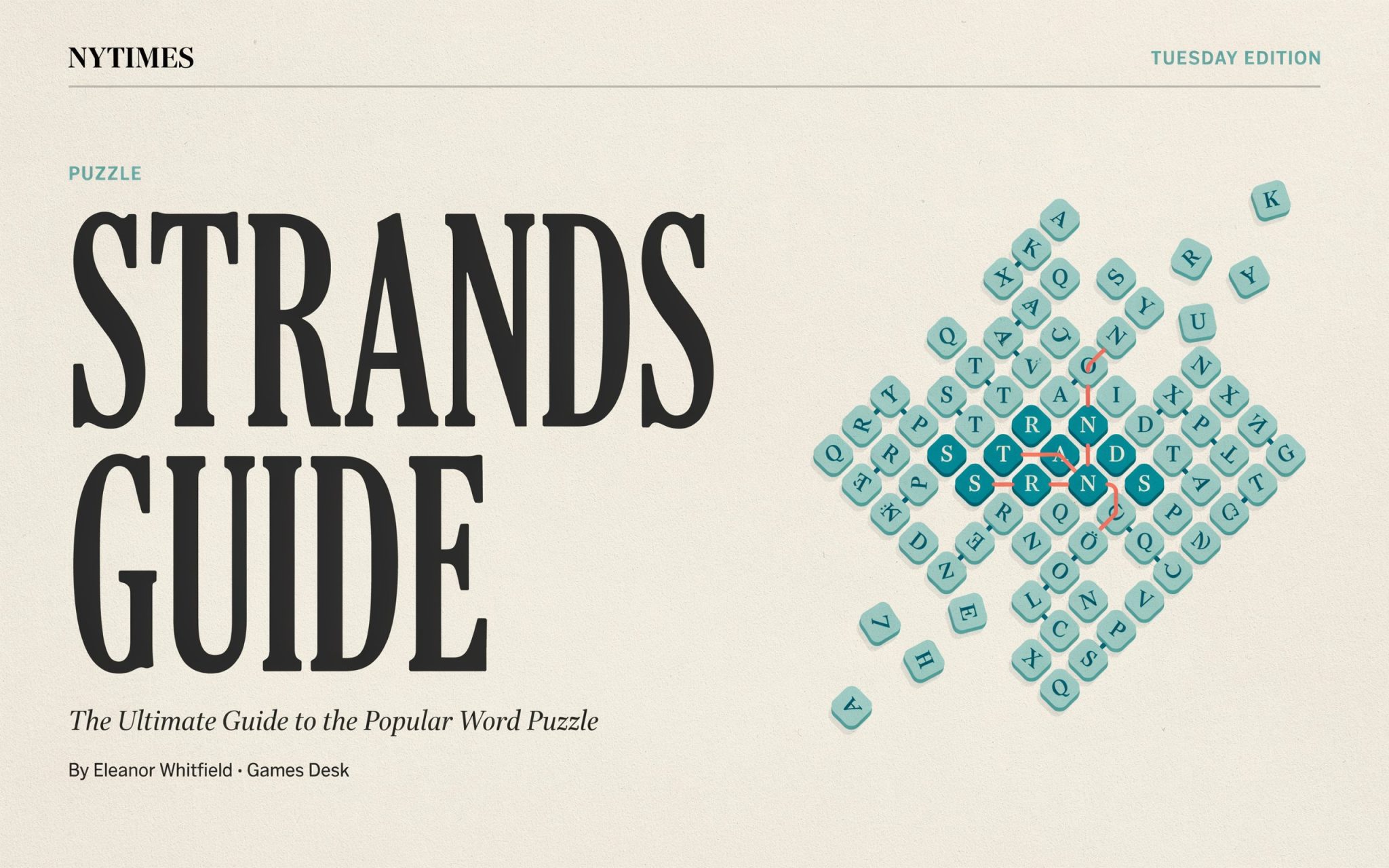

Word games have always been a favorite pastime for people who enjoy testing their vocabulary and problem-solving skills. Over the years, puzzle enthusiasts have embraced classics such as crosswords, Sudoku, and word searches. Recently, however, a new puzzle has captured the attention of players around the world: New York Times Strands.
This engaging daily puzzle combines the excitement of word discovery with the challenge of identifying hidden themes. Whether you’re a casual player looking for a fun mental workout or a dedicated puzzle lover seeking your next challenge, Strands offers an entertaining experience that keeps players coming back every day.
In this comprehensive guide, we’ll explore everything you need to know about New York Times Strands, including how it works, why it has become so popular, strategies for success, and what makes it different from other word games.
What Is New York Times Strands?
New York Times Strands is a daily word puzzle developed by The New York Times Games team. The puzzle presents players with a grid of letters and challenges them to discover words connected by a specific theme.
Unlike traditional word searches where players look for predetermined words, Strands requires players to identify the theme and uncover related words hidden throughout the grid.
Think of it like being handed a treasure map without being told exactly where the treasure is buried. You have clues, but you must use logic, creativity, and observation to uncover the hidden answers.
The Core Concept
Each puzzle contains:
- A letter grid
- A theme clue
- Several theme-related words
- A special word called the “Spangram”
The objective is to locate all theme words while also discovering the Spangram, which connects the puzzle’s overall concept.
The History Behind New York Times Games
The New York Times has long been associated with high-quality puzzles and word games. Its crossword puzzle has been a cultural icon for decades, attracting millions of players worldwide.
As digital gaming evolved, the company expanded its offerings with successful games such as:
- Wordle
- Connections
- Spelling Bee
- Mini Crossword
- Tiles
Strands represents another step in this evolution, offering players a fresh challenge while maintaining the newspaper’s reputation for intelligent and engaging puzzles.
The Rise of Digital Puzzle Culture
The popularity of online word games surged dramatically in recent years. Many people enjoy daily puzzles because they provide:
- Mental stimulation
- Entertainment
- Relaxation
- Routine and consistency
- Social sharing opportunities
Strands fits perfectly into this growing trend.
How New York Times Strands Works
At first glance, Strands may seem similar to a traditional word search. However, it introduces several unique mechanics that make the experience much more dynamic.
Each puzzle begins with a letter-packed grid where hidden words are waiting to be uncovered. Words can be formed by connecting adjacent letters in any direction, including diagonally.
Finding Theme Words
The puzzle provides a clue describing a theme.
For example, a clue might relate to:
- Musical instruments
- Types of desserts
- Ocean creatures
- Movie genres
- Household items
Your task is to identify words that fit within that theme.
Understanding the Spangram
The Spangram serves as the puzzle’s centerpiece, connecting all the hidden words under a single theme.
It typically stretches across the grid and summarizes the puzzle’s overall theme. Finding the Spangram often makes discovering the remaining words significantly easier.
Many experienced players focus on locating the Spangram first because it provides valuable context.
Why Strands Has Become So Popular
The success of Strands isn’t accidental. Several factors contribute to its growing popularity among players of all ages.
Easy to Learn
The basic concept is simple enough for beginners to understand quickly.
Even someone who has never played before can grasp the rules within minutes.
Challenging to Master
While the basics are simple to grasp, the puzzle becomes far more satisfying as players refine their ability to spot patterns and uncover themes.
This balance between accessibility and challenge keeps players engaged.
Daily Variety
Every puzzle introduces a new theme, ensuring that the experience remains fresh.
One day may focus on food, while another explores science, travel, sports, or entertainment.
Short Yet Engaging
Most puzzles can be completed in a relatively short amount of time, making them perfect for:
- Morning routines
- Coffee breaks
- Commuting
- Relaxing before bed
Key Features That Make Strands Unique
Many word games exist today, but Strands stands apart due to its innovative design.
Theme-Based Discovery
Instead of merely finding random words, players must understand relationships between words.
This adds an extra layer of critical thinking.
Flexible Word Paths
Words can bend and twist throughout the grid.
Unlike traditional word searches where words often appear in straight lines, Strands allows more creative pathways.
Hint System
The game includes hints that help players progress when they become stuck.
This feature prevents frustration while preserving the puzzle’s challenge.
Strategic Gameplay
Success depends not only on vocabulary but also on pattern recognition and logical deduction.
Benefits of Playing New York Times Strands
Beyond entertainment, Strands offers several cognitive benefits.
Vocabulary Expansion
Players frequently encounter unfamiliar words and concepts.
Over time, this exposure naturally broadens vocabulary.
Improved Pattern Recognition
The process of spotting connections between letters strengthens visual recognition skills.
Enhanced Problem-Solving
Each puzzle requires analytical thinking and strategic decision-making.
Mental Exercise
Just as physical activity keeps the body healthy, puzzles help keep the mind active and engaged.
Many players view Strands as a daily brain workout.
Strategies for Solving Strands More Efficiently
While every puzzle is different, certain techniques can improve performance.
Study the Theme Carefully
The clue often contains subtle hints.
Take a moment to consider multiple interpretations before searching the grid.
Look for Obvious Words First
Identifying a few theme words early can reveal patterns that make the remaining answers easier to find.
Search for Related Categories
If you discover one word connected to a category, think of other words that belong to the same group.
Find the Spangram Early
The Spangram frequently unlocks the puzzle’s central idea.
Once discovered, it can guide your search for remaining words.
Use Hints Wisely
Hints are valuable tools but should be used strategically rather than immediately.
Common Challenges Players Face
Even experienced puzzle enthusiasts encounter difficulties.
Misinterpreting the Theme
Sometimes players become convinced of an incorrect interpretation and waste time searching for unrelated words.
Overlooking Simple Answers
People often expect complex solutions and miss obvious words hiding in plain sight.
Ignoring Grid Patterns
The arrangement of letters frequently provides clues about word placement.
Failing to notice these patterns can make solving harder.
Becoming Too Focused
Occasionally, taking a short break helps players return with a fresh perspective.
Comparing Strands to Other Popular Word Games
Strands shares similarities with several popular word puzzles but also introduces distinctive features.
Strands vs. Wordle
Wordle focuses on guessing a single hidden word.
Strands requires discovering multiple connected words within a theme.
Strands vs. Connections
Connections challenges players to group words into categories.
Strands involves locating words physically hidden within a grid.
Strands vs. Crossword Puzzles
Crosswords rely heavily on clues and definitions.
Strands emphasizes theme recognition and letter patterns.
Strands vs. Traditional Word Searches
Traditional word searches focus solely on finding listed words.
Strands requires players to determine which words belong to the theme before locating them.
Tips for Beginners
New players can improve quickly by following a few practical recommendations.
Practice Daily
Consistency builds familiarity with common puzzle structures.
Stay Open-Minded
Theme clues can be interpreted in multiple ways.
Avoid locking yourself into a single assumption too early.
Learn from Mistakes
Every difficult puzzle provides valuable experience.
Be Patient
Some puzzles are naturally more challenging than others.
Patience often leads to breakthroughs.
The Community Around Strands
One of the most enjoyable aspects of modern word games is the community that develops around them.
Players frequently:
- Share solving experiences
- Discuss strategies
- Compare completion times
- Debate tricky clues
- Celebrate difficult victories
Online discussions create a sense of connection among puzzle enthusiasts worldwide.
Social Media Engagement
Many players enjoy posting their results and discussing daily challenges with friends.
This social element helps maintain long-term interest in the game.
The Future of New York Times Strands
As digital puzzle gaming continues to grow, Strands appears well-positioned for long-term success.
Its combination of:
- Creative themes
- Daily challenges
- Accessible gameplay
- Intellectual stimulation
makes it appealing to a broad audience.
Future updates may introduce new features, but the puzzle’s core appeal is likely to remain unchanged: providing a satisfying blend of discovery, strategy, and wordplay.
Conclusion
New York Times Strands has quickly established itself as one of the most engaging daily word puzzles available today. By combining thematic thinking, vocabulary skills, and pattern recognition, it offers a refreshing alternative to traditional word games.
Whether you’re solving your first puzzle or striving to improve your daily performance, Strands delivers a rewarding experience that challenges the mind while remaining enjoyable and accessible. Like a daily treasure hunt hidden within a grid of letters, every puzzle invites players to uncover connections, discover patterns, and experience the satisfaction of finding the final piece of the puzzle.
As its popularity continues to grow, Strands is proving that innovative word games still have the power to captivate audiences and keep minds sharp in the digital age.
Frequently Asked Questions
1. What is the goal of New York Times Strands?
The goal is to find all theme-related words hidden within a letter grid and identify the Spangram that represents the puzzle’s main theme.
2. What is a Spangram in Strands?
A Spangram is a special word or phrase that stretches across the grid and summarizes the overall theme of the puzzle.
3. Is New York Times Strands free to play?
Availability may vary depending on New York Times Games access policies, but many users can play through the official games platform.
4. How is Strands different from a traditional word search?
Unlike standard word searches, Strands requires players to determine the theme and discover related words rather than simply locating words from a provided list.
5. Does playing Strands help improve vocabulary?
Yes. Regular play exposes users to new words, concepts, and associations, which can contribute to vocabulary growth and stronger language skills over time.