




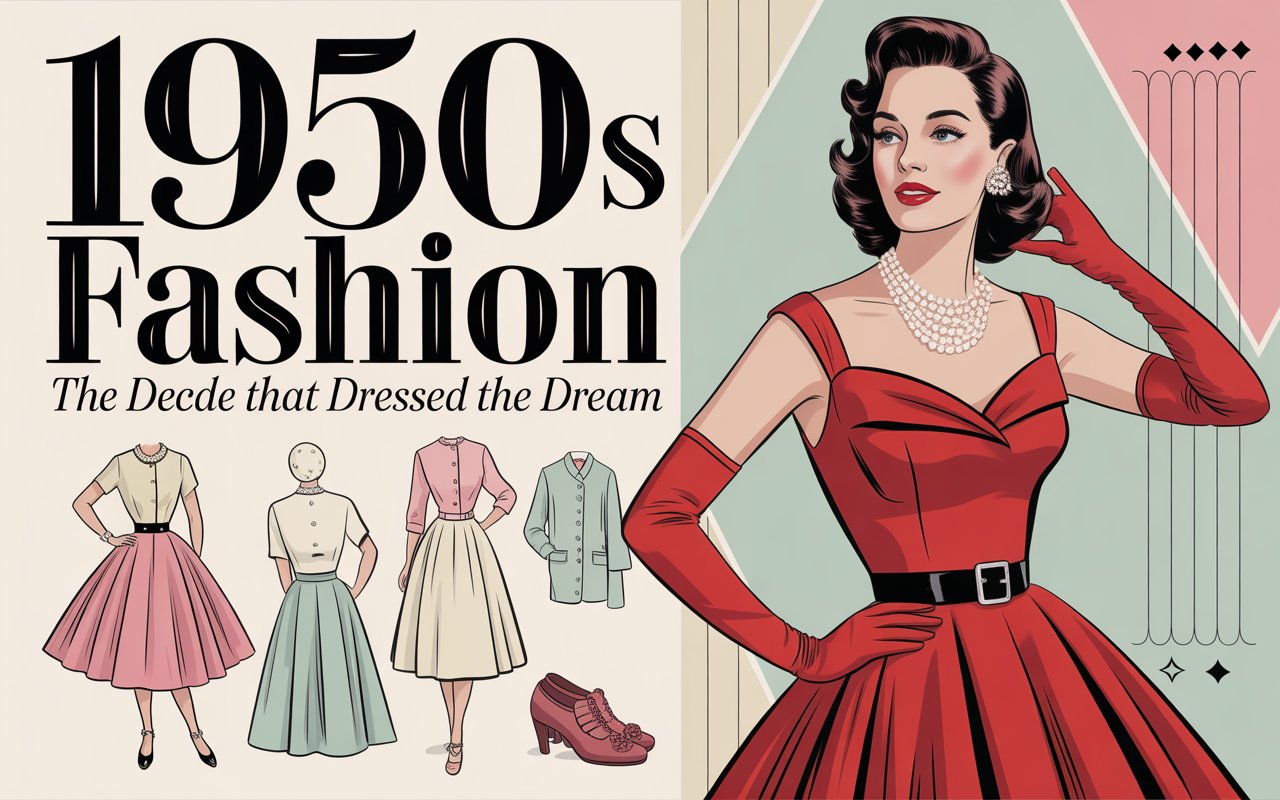

Close your eyes for a moment and picture a black-and-white movie scene. A woman twirls in a full skirt, the fabric floating like a soft cloud around her knees. A man adjusts his sharp suit and slicks back his hair before stepping out onto a bustling street. Sounds familiar, right? That’s the magic of 1950s fashion—a decade that dressed hope, confidence, and a brand-new sense of style after years of hardship.
The 1950s weren’t just about clothes. They were about identity. After World War II, people wanted beauty, structure, and a little bit of glamour in everyday life. Fashion became a way to say, “We’re moving forward.” In this article, we’ll take a deep, friendly walk through the world of 1950s style—where it came from, how it looked, who shaped it, and why it still inspires us today.
The Cultural Backdrop of 1950s Style
Fashion never exists in a vacuum, does it? The 1950s were shaped by big social changes. The war had ended, economies were recovering, and families were settling into suburban life. There was a strong focus on stability, tradition, and optimism.
Clothing reflected these values. Outfits were neat, polished, and intentional. People dressed up more often—even for simple errands. Compared to today’s casual hoodies and sneakers, 1950s fashion feels almost like a carefully wrapped gift.
At the same time, new media like television and Hollywood films brought style icons directly into living rooms. Suddenly, everyday people could copy the looks of movie stars, and fashion trends spread faster than ever.
Women’s Silhouettes: Curves, Confidence, and Grace
One word defined women’s fashion in the 1950s: shape. Designers celebrated curves, creating silhouettes that emphasized the waist and softened the shoulders and hips.
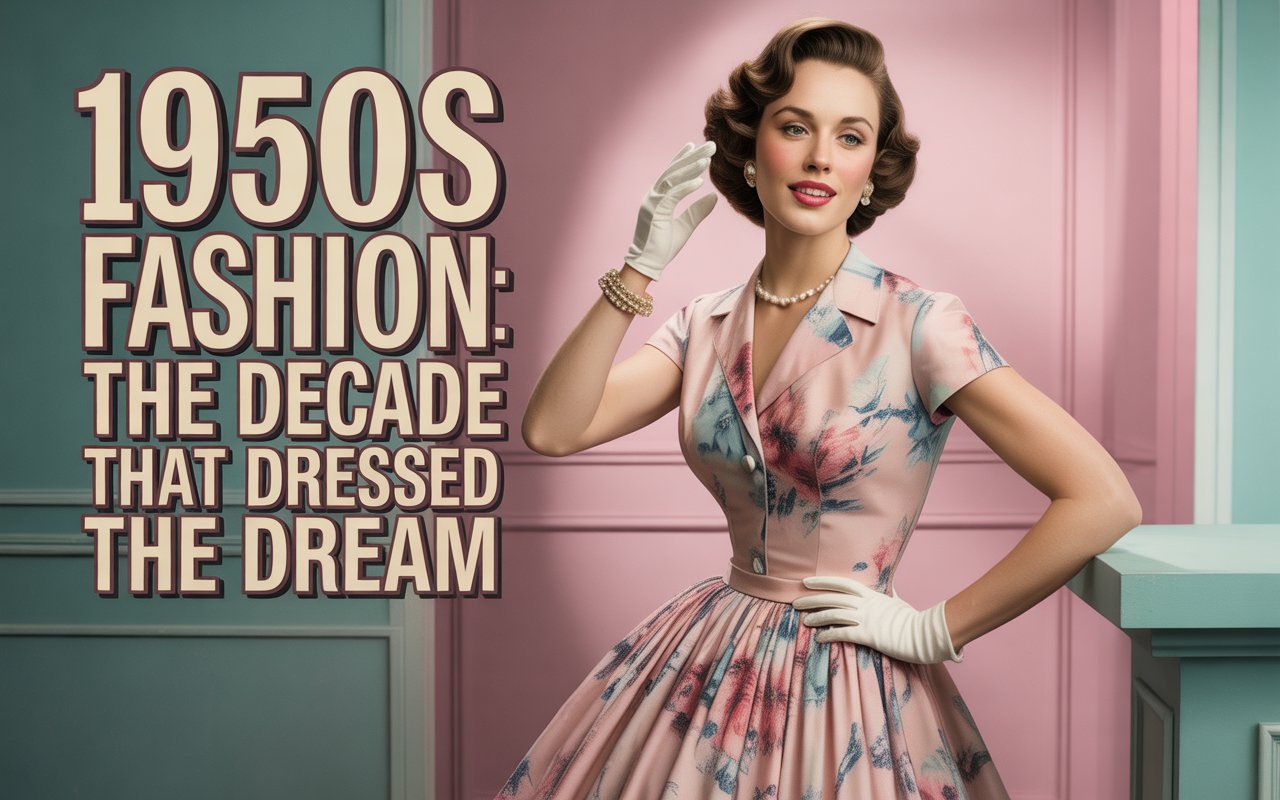
The most iconic look was the hourglass figure. Dresses were designed to hug the body at the top and flare out below the waist. It was elegant, feminine, and confident—like a blooming flower after winter.
Undergarments played a big role here. Structured bras and petticoats helped create that signature outline. While it might sound uncomfortable by today’s standards, many women felt empowered by the polished appearance these clothes gave them.
The Rise of Full Skirts and Fitted Dresses
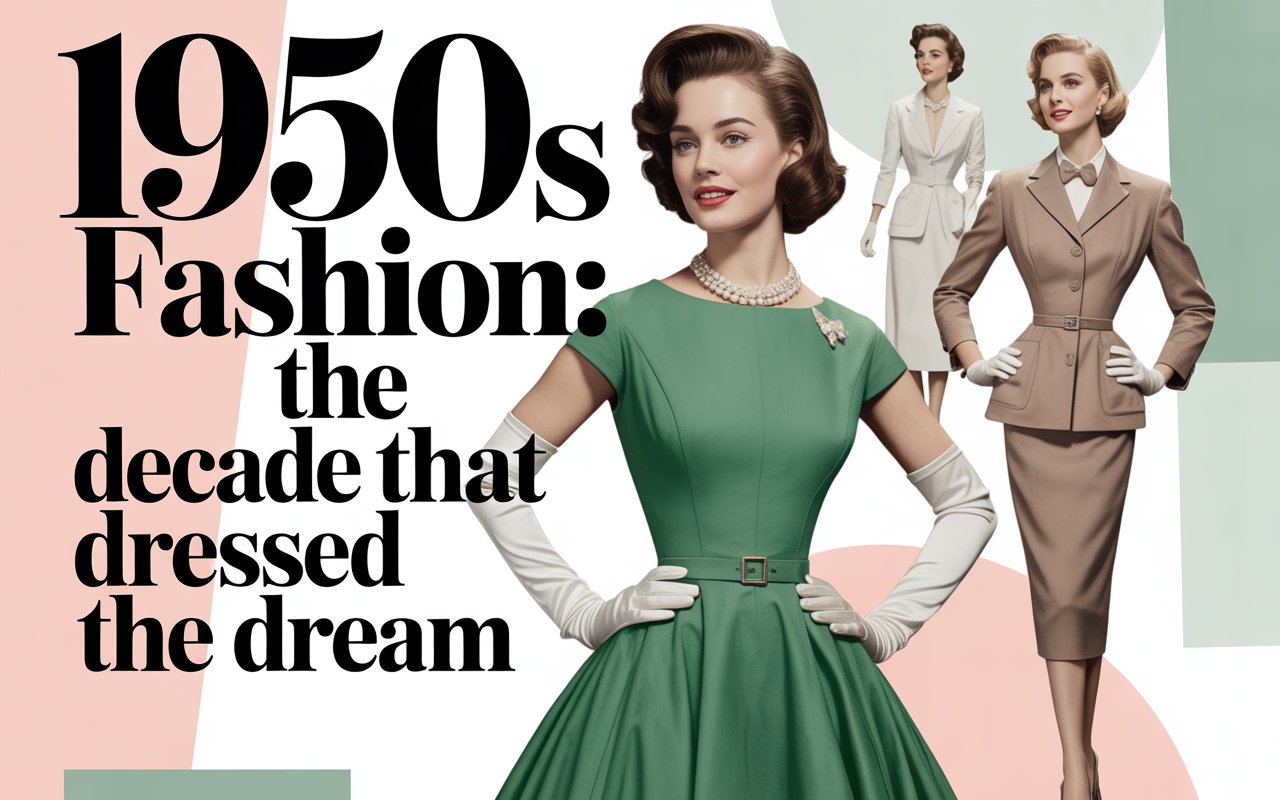
If 1950s fashion had a uniform, the full skirt would be it. Often paired with a snug bodice, these skirts created movement and drama with every step.
Day dresses featured cheerful prints, buttons down the front, and modest necklines. For evenings, fabrics became richer—satins, silks, and velvets that caught the light beautifully. Cocktail dresses hugged the body more closely, proving that glamour didn’t need excess.
Think of these dresses like a well-written letter: thoughtful, expressive, and designed to leave an impression without shouting.
Casual Wear and the Birth of Youth Style
Here’s where things get interesting. While adults leaned into elegance, teenagers started carving out their own identity. The 1950s saw the birth of youth culture, and fashion followed closely behind.
Teen girls wore circle skirts with sweaters or blouses, often paired with ankle socks and loafers. Boys favored jeans, plain T-shirts, and leather jackets—a look that felt rebellious compared to their parents’ tailored outfits.
This shift was subtle but powerful. It marked the beginning of fashion as a tool for self-expression rather than just social expectation.
Men’s Fashion: Clean Lines and Classic Appeal
Men’s fashion in the 1950s was all about looking put together. Suits were common, even for daily wear. Jackets had structured shoulders, trousers were neatly pressed, and shirts were crisp.
Colors stayed fairly conservative—think greys, blues, and browns—but patterns like checks and pinstripes added interest. Ties were slim and often worn with tie clips for a polished finish.
Casual menswear also evolved. Knit sweaters, short jackets, and denim became acceptable for relaxed settings. Still, even “casual” looks were tidy by today’s standards.
Hollywood Icons and Their Influence
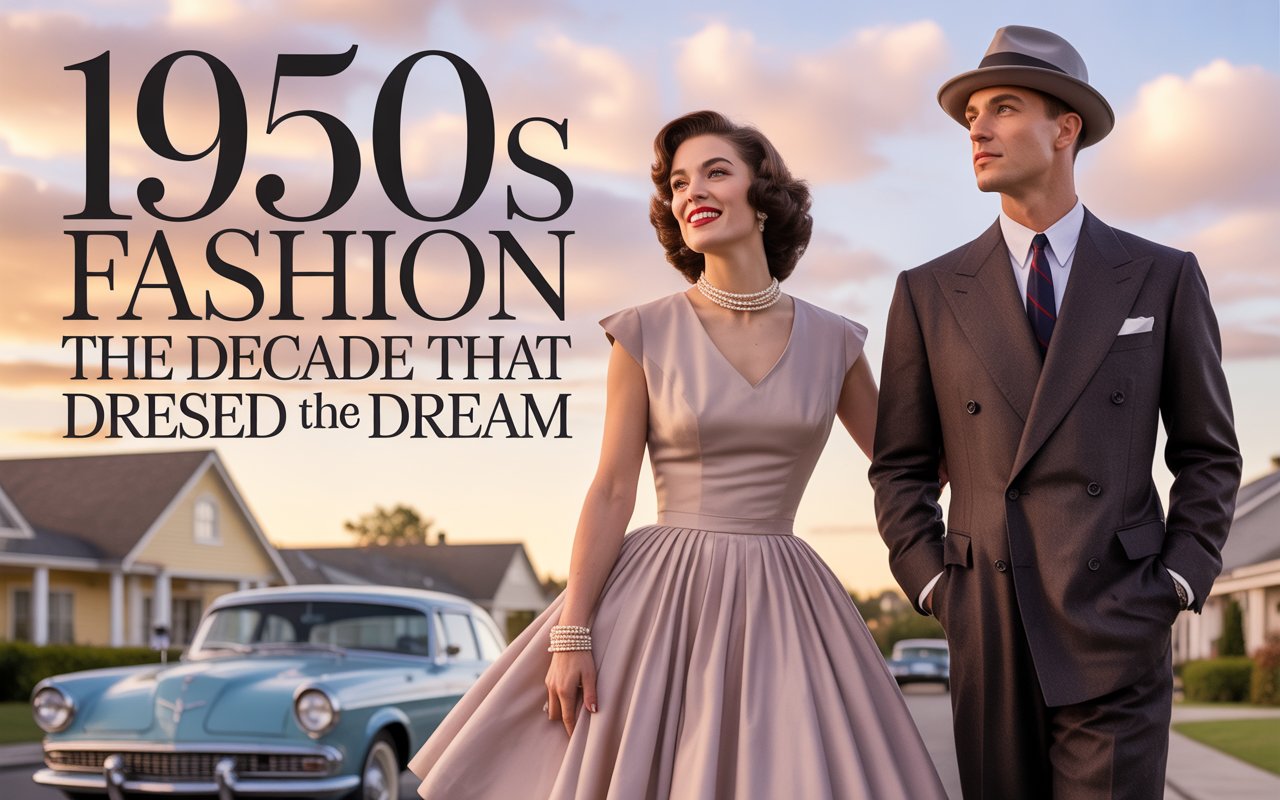
Ever notice how a single movie can spark a trend? In the 1950s, Hollywood had enormous influence over fashion choices.
Actresses like Marilyn Monroe and Grace Kelly represented two sides of the style spectrum. One embraced bold glamour, the other timeless elegance. Both shaped how women dressed, from red-carpet gowns to everyday outfits.
For men, actors like James Dean and Marlon Brando changed the game. Their effortless, slightly rebellious looks made simplicity cool. A white T-shirt was no longer just underwear—it was a statement.
Accessories That Completed the Look
Outfits in the 1950s weren’t complete without accessories. In fact, these finishing touches were just as important as the clothes themselves.
Women wore gloves, hats, and small structured handbags. Shoes often had low to mid heels, balancing comfort and style. Jewelry leaned toward pearls, brooches, and simple gold pieces.
Men accessorized with hats, watches, and polished shoes. Even sunglasses became a fashion item, not just a practical one. Accessories were like punctuation marks—they gave the outfit clarity and confidence.
Hairstyles and Grooming Trends
Fashion didn’t stop at clothing. Hair and grooming were essential parts of the overall look.
Women styled their hair in soft curls, waves, or updos that framed the face neatly. Regular salon visits were common, and hairspray was practically a household staple.
Men kept their hair short on the sides and longer on top, often slicked back with pomade. Facial hair was rare, reinforcing the clean-cut ideal of the decade.
These grooming habits reinforced the era’s emphasis on order and presentation.
Everyday Fashion vs. Special Occasions
One fascinating thing about the 1950s is how clearly people separated everyday wear from special-occasion outfits.
Daytime clothes were practical but still stylish—cotton dresses, sensible shoes, and simple layers. Evening wear, on the other hand, was dramatic and refined. Long gowns, tailored tuxedos, and luxurious fabrics came out for dinners, dances, and events.
It’s a bit like having two wardrobes in one life: one for daily routines and another for moments meant to be remembered.
How 1950s Fashion Shaped the Future
So why does 1950s fashion still matter today? Because its influence never really faded.
Designers continue to revisit the silhouettes, fabrics, and details of the era. You’ll see high-waisted skirts, vintage-inspired dresses, and classic tailoring on modern runways and in everyday stores.
More importantly, the decade taught us that clothing can reflect hope, identity, and cultural change. It showed how style can balance tradition with innovation—a lesson that still feels relevant.
Why the 1950s Still Feel Timeless
There’s something comforting about 1950s fashion. Maybe it’s the structure, the attention to detail, or the sense of care woven into every outfit.
In a fast-moving world, these styles remind us to slow down and appreciate craftsmanship. Like a favorite old song, they never seem to go out of style—they just find new listeners.
Conclusion: A Decade That Dressed More Than Bodies
The 1950s weren’t just about skirts, suits, or hairstyles. They were about rebuilding confidence and expressing optimism through fashion. Clothes became symbols of progress, femininity, masculinity, and individuality—all at once.
By understanding 1950s fashion, we don’t just learn about what people wore. We learn how they lived, dreamed, and presented themselves to the world. And honestly, isn’t that what makes fashion truly interesting?
Frequently Asked Questions
What made 1950s fashion so distinctive?
The focus on structured silhouettes, polished details, and clear gender styles gave the decade a very recognizable look.
Why were full skirts so popular in the 1950s?
They symbolized femininity and optimism, offering dramatic movement and a flattering shape after years of wartime simplicity.
Did teenagers dress differently from adults in the 1950s?
Yes, this decade marked the rise of youth fashion, with teens embracing more relaxed and expressive clothing.
How did Hollywood influence everyday fashion during this time?
Movies and stars introduced styles that people eagerly copied, making film a powerful fashion guide.
Is 1950s fashion still relevant today?
Absolutely. Modern designers often revisit the era for inspiration, and many classic elements remain stylish and wearable.